Call Now Request FREE consultation - 1866-758-4529

Texas Truck Brake Failure Accident Lawyer

Bad brakes on semi trucks

Key takeaway: A truck brake failure is rarely a mystery with no cause. Worn parts, poor adjustment, missed inspections, bad repairs, driver misuse, or a defective component usually came first. The tractor and trailer should be preserved before repairs erase the evidence. A proper investigation combines a physical brake inspection with maintenance records, driver reports, electronic data, and the carrier’s safety history.

If an 18-wheeler could not slow or stop before hitting you, the driver’s claim that ‘the brakes went out’ is only the start. I have handled serious Texas truck cases since 1985. I look for what failed first. Was an inspection skipped? Was a repair delayed? Did someone ignore a known defect? Did the driver overheat a weak brake system?

The answers often show who was at fault. Our work as a Texas truck accident lawyer starts with saving the truck and key records before the carrier can repair it and put it back on the road.

Why a Brake-Failure Case Must Start Quickly

The tractor and trailer are key evidence. Once brake parts are replaced, adjusted, cleaned, or thrown away, an expert may never know their condition after the crash. Even routine repair work can change the proof.

A written hold notice should name both the tractor and each trailer. It should also cover removed parts, repair files, inspection reports, data, photos, video, dispatch records, and messages about brake problems. A court order may be needed to allow an inspection before the truck is changed.

Greg Baumgartner’s perspective: A brake failure should not be treated as a mystery. Brakes often give warnings through wear, air loss, poor adjustment, heat, dash alerts, or driver reports. The key is to find out who saw the warning and what that person or company did next.

Why Semi-Truck Brakes Require Extra Care

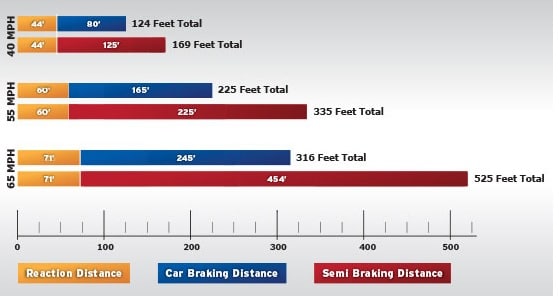
A fully loaded truck may weigh as much as 80,000 pounds. The FMCSA warns that a large truck traveling at 65 mph may need up to two football fields to stop. Speed, load weight, road grade, weather, reaction time, and bad brakes can add to that distance. See the agency’s guidance on long truck stopping distances.

A brake defect does not have to cause a total failure. Weak brakes on one axle can shift too much work to the other wheels. The truck may need more room to stop. It may also pull to one side, skid, or jackknife.

Common Brake Problems Found After Truck Crashes

  1. Out-of-adjustment brakes. Excessive pushrod travel can reduce braking force at one or more wheels.
  2. Worn linings, pads, drums, or rotors. Parts that are too thin, cracked, dirty, or metal-on-metal may not stop the truck safely.
  3. Air-system leaks. Damaged hoses, loose fittings, failing chambers, or compressor problems can reduce pressure in an air-brake system.
  4. Brake imbalance. Poorly matched or adjusted parts may make some wheels brake harder than others. That can cause a skid or jackknife.
  5. Brake fade and overheating. Riding the brakes downhill can create enough heat to reduce friction. Poor training, high speed, or a heavy load can make it worse.
  6. Defective parts. A valve, slack adjuster, chamber, hose, pad, drum, or rotor may fail because of a product defect.

Federal and Texas Brake-Safety Rules

Truck companies must do more than react after a part breaks. The federal commercial-truck brake standards require working service, parking, and emergency brakes. They also set rules for brake parts. The inspection, repair, and maintenance rules require regular upkeep and driver checks. Safety defects must be fixed. Periodic inspections and trained brake inspectors are also required.

Texas has incorporated the Federal Motor Carrier Safety Regulations through 37 Texas Administrative Code §4.11. The rule has a set scope and some exceptions. The rules that apply depend on the carrier, truck, cargo, and type of trip.

Important duties may include:

  • Keeping the tractor, trailer, and brake system in safe operating condition.
  • Using a regular inspection, repair, and upkeep program.
  • Making sure the driver is satisfied that the truck is safe before driving.
  • Reporting discovered defects and repairing safety-related problems before the vehicle returns to service.
  • Completing the required periodic check for the tractor and each trailer.
  • Using people who meet federal qualifications for brake inspection and service.

Brake violations remain a real enforcement problem. During the 2025 Brake Safety Week inspections, inspectors placed 2,296 of 15,175 trucks out of service for brake violations. That 15.1% rate came from a focused check. It is not the share of crashes caused by bad brakes.

Our related guide to federal trucking regulations in Texas cases explains how safety-rule violations can become evidence in a truck accident claim.

Who May Be Responsible for a Truck Brake Failure?

More than one person or company may share responsibility. A careful investigation should identify who may be responsible for the truck accident rather than stopping at the driver.

The Motor Carrier

The trucking company may be at fault for poor maintenance, ignored defect reports, inadequate inspections, untrained workers, or pressure to keep an unsafe truck moving. Repair records may show repeat complaints followed by quick fixes.

The Driver

A driver may skip a check, ignore a warning light or low-air alarm, or fail to report a defect. Speed, close following, or poor downhill braking may also play a part. Driver error and bad equipment can exist at the same time.

The Tractor or Trailer Owner

The tractor and trailer may have different owners. A trailer owner may be at fault if poor brake maintenance or an open defect contributed to the crash.

A Maintenance Contractor

An outside shop may be at fault for a bad adjustment, a missed defect, a wrong part, poor installation, or work that was billed but not done.

A Parts Manufacturer or Supplier

A product claim may arise when a brake part has a design, manufacturing, or warning defect. The failed part should be saved for expert review.

A Cargo or Loading Company

Too much weight or a poor load balance can make stopping harder. Scale tickets, bills of lading, and loading records may matter.

What Evidence Can Prove Brake Failure?

A strong truck accident investigation compares the truck with the company’s records. Neither should be viewed alone. Useful proof may include:

  1. A recorded check of the tractor, trailer, brake chambers, pushrod travel, linings, pads, drums, rotors, hoses, valves, air pressure, and warning systems.
  2. Repair histories, invoices, work orders, parts purchases, and service plans.
  3. Driver reports, defect notices, annual checks, and roadside reports.
  4. Engine, ABS, fault code, tracking, and event data, when available.
  5. Dashcam video, nearby business video, photographs, skid or tire marks, and witness accounts.
  6. Dispatch messages, driver texts, emails, and communications about brake warnings or repair requests.
  7. Driver training, worker records, company rules, and past brake violations.
  8. Cargo weights, scale tickets, loading records, and bills of lading.

What an Independent Brake Inspection Can Reveal

A good check goes far beyond whether the pedal still moves. An expert may measure pushrod stroke, pad thickness, drum and rotor wear, air pressure, leaks, warning devices, and heat damage. Each required wheel and axle should be checked. The tractor and trailer must be treated as a single braking system.

A police or roadside check can help, but it may not answer every question. The report may list an out-of-service defect without each key measurement or removed part. It may not show the choice that led to the defect. An outside expert gives the injured person a fair chance to save that proof.

Bad brakes may play a part in a rear-end truck accident, a jackknife, a downhill loss of control, or a crash into stopped traffic. Yet not every rear-end crash is a brake case. The brakes may have worked, even though the driver sped, looked away, or followed too closely. The proof must show whether the cause was the truck, the driver, or both.

Compensation After a Bad-Brake Truck Crash

A person injured by poor brake maintenance or unsafe driving may seek compensation for crash-related losses. Those losses may include:

  • Past and future medical expenses.
  • Lost wages and reduced earning capacity.
  • Physical pain, mental anguish, impairment, and disfigurement.
  • Property damage and other accident-related expenses.
  • Wrongful death and survival damages when a family loses a loved one.

Exemplary damages may be awarded in rare cases that meet the requirements of Texas law. One missed check does not prove gross negligence by itself. The company’s safety history and knowledge often matter.

What to Do After a Suspected Brake-Failure Crash

  • Get medical care. Your health comes first. Quick medical care also documents injuries that may worsen.
  • Report the crash. Ask police to note any claim of brake trouble, warning lights, smoke, heat, or part failure.
  • Save what you can. Keep photos, video, witness details, medical records, damaged property, and insurer messages.
  • Be careful with a recorded statement. The carrier’s insurer may try to shift blame before the facts are known.
  • Seek legal help quickly. The truck may be repaired or returned to service unless someone acts to preserve it.

Why Experience With Truck Evidence Matters

I founded Baumgartner Law Firm in 1985. I have spent my career helping people with serious injuries and families facing a wrongful death. I hold two law degrees and graduated from the Trial Lawyers College. Those honors support a simple method: start early, test the company’s story, and never assume its records tell the full truth.

I keep a low-volume practice because serious truck cases need close attention. Clients speak with me, not just a case manager. Our firm has never lost a commercial vehicle case. We prepare each accepted case as if the truck company will force us to prove it in court.

Frequently Asked Questions

How can I tell whether bad brakes caused the truck crash?

You usually cannot tell from the crash scene alone. The best answer comes from checking the tractor and trailer. Those findings should be compared with repair records, defect reports, data, photos, and the driver’s actions before impact.

Do I have to prove that every brake failed?

No. A claim does not require total brake failure. Worn, leaking, hot, or out-of-adjustment brakes may cut stopping power or control enough to help cause a crash.

No. A ticket or an out-of-service defect can be useful evidence, but it does not determine fault by itself. The defect must be tied to the crash. Other people or companies may also share fault.

How long do I have to file a Texas truck accident lawsuit?

Texas law generally gives an injured person two years to file suit. The same general period applies to an action for injury resulting in death under Texas Civil Practice and Remedies Code §16.003. Some facts can change that deadline. Key proof can also vanish much sooner. Do not wait two years to start the review.

Talk With Greg Baumgartner About a Suspected Brake Failure

If you or a loved one suffered a serious injury in a Texas truck crash, I will discuss what happened and what proof should be saved. We can also cover the next practical step. The call is free, and there is no attorney’s fee unless we win your case.

Call (281) 893-0760 or toll-free 1-866-758-4529. You can speak directly with Greg Baumgartner about your options.

Call us to speak with an award-winning Texas Truck Accident Attorney

Call IconCall (281) 893-0760 or Toll Free 1-866-758-4529

More Info Areas