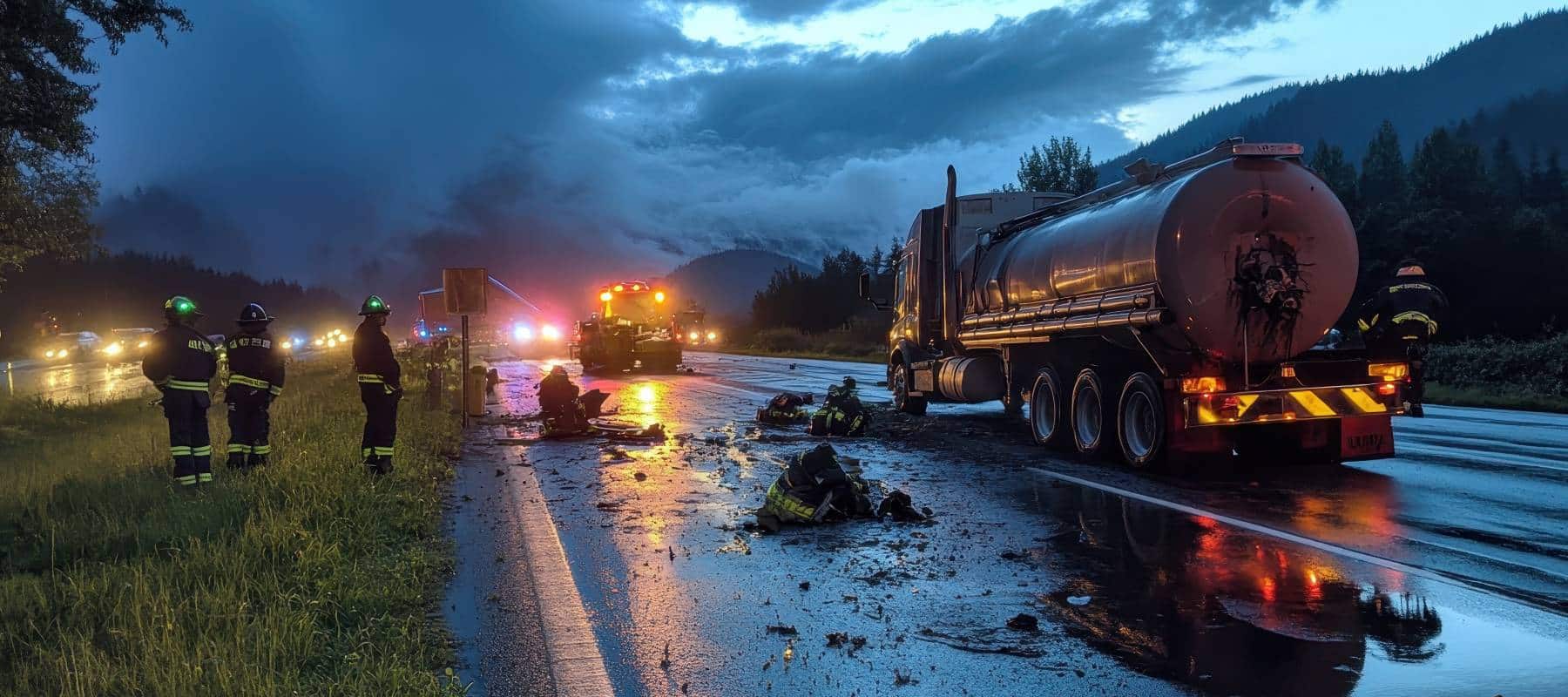
Oil and gas production puts heavy trucks on some of Texas’s most demanding roads. If a crude-oil tanker, water hauler, vacuum truck, frac-sand truck, hotshot rig, or other oilfield vehicle causes a serious crash, an experienced Texas truck accident lawyer should investigate more than the driver. The real case may involve the trucking company, oilfield service company, operator, contractor, maintenance provider, cargo loader, or another business in the chain.
Greg Baumgartner founded Baumgartner Law Firm in 1985. He has handled serious truck and commercial vehicle cases for more than 40 years. The firm keeps a selective caseload. That gives major injury and wrongful death cases direct attorney attention and a focused investigation.
40+ Years
Texas Statewide
Serious Cases
No Fee Unless We Win
Why Oilfield Truck Crashes Require a Different Investigation
Oilfield transportation is not one business. One load can involve many companies. They may include an oil or gas operator, a service company, a motor carrier, an owner-operator, a broker, a shipper, or a well-site contractor. A separate company may maintain the truck. The name painted on the door may not show who controlled the trip. It may not show who created the danger.
The work is also different. Drivers may cover long miles on rural roads. They may enter lease roads and well sites. Some haul liquids or loads that can shift. Others operate special equipment. Many oilfield jobs run around the clock. The investigation should fit the job the driver was doing.
· Flatbeds carrying pipe, casing, and drilling equipment.
· Hotshot trucks and pickups pulling heavy trailers.
· Cement, coil-tubing, wireline, and well-service vehicles.
· Fuel and chemical transport vehicles.
· Oversized and heavy-equipment haulers.
· Company pickups and service vehicles traveling between well sites.
The Railroad Commission of Texas identifies major producing formations across the state, including the Permian Basin in West Texas and the Eagle Ford Shale in South Texas. Those regions produce considerable movement of equipment, fluids, sand, and other materials between highways, yards, and well sites.
Greg Baumgartner’s Perspective: Follow the Work, Not Just the Truck
In an oilfield truck case, I want to know what the driver was doing for the business at the time of the crash. Where did the load come from? Where was it going? Who sent the driver? What did the load ticket show? When did the driver enter the well site? When did the driver leave? Was there pressure to make another run? These facts can connect the crash to the companies and decisions that caused to the crash.
That is why early records matter. Dispatch data can show the work assignment. Electronic tickets can show timing and cargo. GPS and gate logs can show where the truck went. Company messages may explain why. Together, those records can tell more than a short crash report.
Evidence That Can Make or Break an Oilfield Truck Case
Evidence
What It Can Show
Load tickets and bills of lading
Cargo, weight, origin, destination, customer, timestamps, and who arranged the haul.
Dispatch and job records
Who assigned the trip, expected timing, route, and work purpose?
Well-site and gate records
Arrival, departure, and waiting time at a lease or well site.
GPS and telematics
Route, speed, stops, movement and time history.
ELD and duty-status records
Driving, on-duty and off-duty time when federal or state logging rules apply.
Dash-cam and site video
Driving behavior, lane position, traffic conditions and events before impact.
Driver qualification and training files
Experience, licensing, prior safety issues and training for the job.
Maintenance and inspection records
Brake, tire, steering, lighting or trailer problems that were known or should have been found.
Cargo and securement records
Overweight loads, shifting cargo, poor securement or unsafe loading.
Contracts and company agreements
Which businesses controlled the driver, vehicle, job or transportation work.
Phone and work-app records
Possible distraction and work communications around the time of the collision.
Oilfield Hours-of-Service Rules Are More Complicated Than They Look
Fatigue is a serious risk in any 24-hour industry. Oilfield trucking has an added legal issue. Federal law has limited exceptions for some oilfield operations. Many general accident pages miss this point.
Under 49 C.F.R. § 395.1(d), some drivers used exclusively to transport oilfield equipment may use a special 24-hour restart. A separate waiting-time rule may apply to specially trained drivers of specially constructed vehicles used to service oil wells. FMCSA explains that qualifying examples can include certain coil, wireline, cement, frac, and related well-service equipment.
The exception has limits. It does not erase fatigue rules for every truck tied to the oilfield. First, identify the truck and driver. Then identify the trip and the work being done. Only then can you decide which hours-of-service rules apply.
An oilfield load may stay entirely within Texas, or it may be part of interstate commerce. That classification can affect which safety rules and insurance requirements apply.
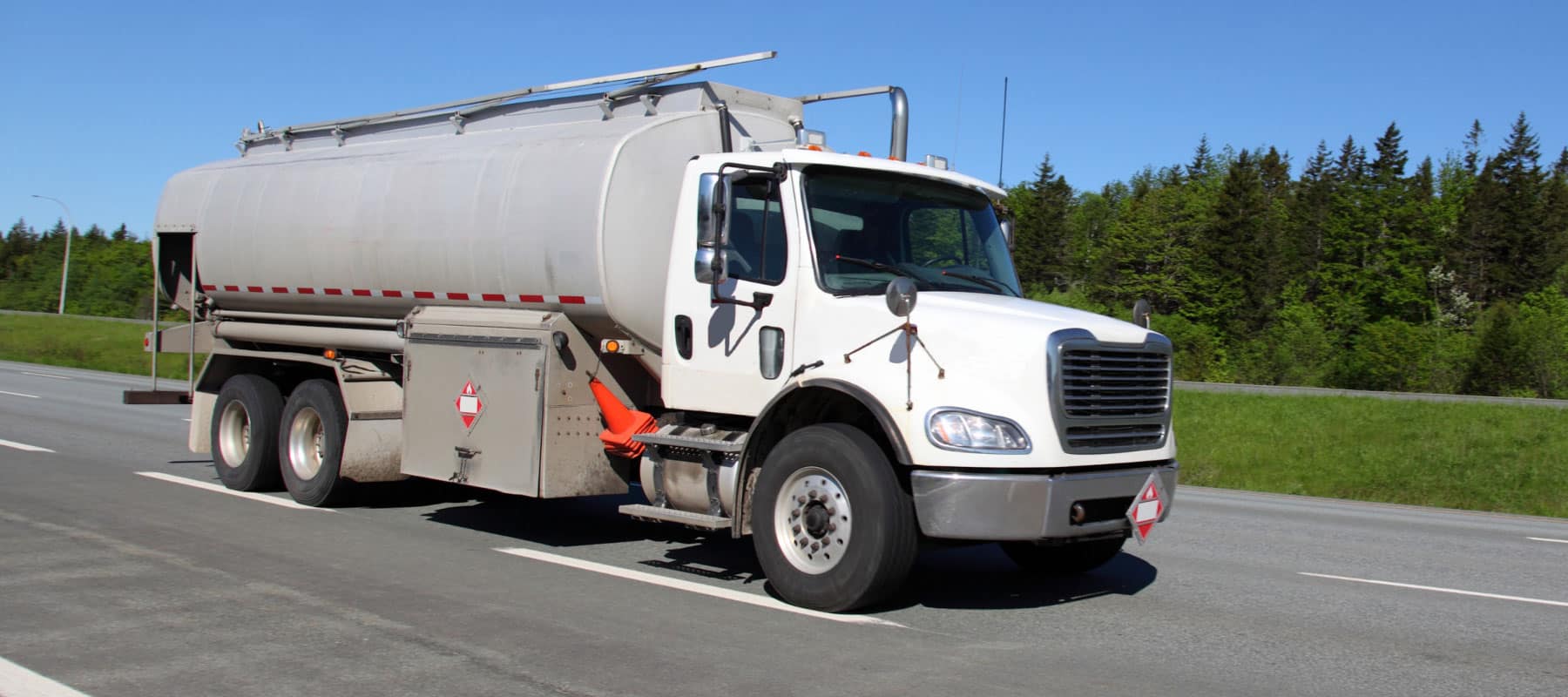
Some oilfield crashes involve crude oil, fuel, chemicals, or other hazardous materials. A collision can cause a fire, spill, or exposure in addition to the impact injuries.
When a tanker is involved, we also examine tank configuration, cargo, placards, loading, securement, route, maintenance, and emergency response. See our Texas tanker truck accident page for more on these cases.
What to Do After an Oilfield Truck Crash
1. Call 911 and get medical help. Your health comes first, and a law-enforcement investigation can document basic crash information.
2. Photograph the truck and its markings. Capture company names, USDOT or TxDMV numbers, unit numbers, license plates, trailers, placards, and visible cargo.
3. Identify the work involved. If you can do so safely, note the well site, lease road, yard, operator, or service company associated with the trip.
4. Save your own evidence. Keep photos, video, dash-cam files, witness contacts, medical records, and damaged personal property.
5. Do not assume the first insurer is the only insurer. Several companies or policies may be involved.
6. Act early on commercial records. Electronic data and business records may be overwritten or discarded during routine system operations.
If You Were Working When the Crash Happened
Oilfield workers may be hurt while driving or riding as passengers. They can also be struck while working near trucks. A work injury can raise questions about employer benefits or workers’ compensation. Texas also has employers that do not subscribe to workers’ compensation. A separate claim may exist against another careless driver or company.
Those claims should be coordinated carefully because the parties, insurance, and reimbursement issues can overlap.
Compensation in a Serious Oilfield Truck Case
The value of a claim depends on the injury, liability, insurance, and long-term impact. Damages may include:
· Past and future medical expenses.
· Lost wages and reduced earning capacity.
· Physical pain and mental anguish.
· Physical impairment.
· Disfigurement and scarring.
· Property damage and related expenses.
· Wrongful death and survival damages when a family member is killed.
Coverage should be investigated early. Our guide to truck liability insurance coverage explains why serious commercial claims may involve more than one policy.
Texas Shared-Fault Rules
Texas uses proportionate responsibility. Under Texas Civil Practice and Remedies Code Chapter 33, an injured person cannot recover if that person is more than 50 percent responsible. If the person is 50 percent or less responsible, the recovery can be reduced by that percentage.
Commercial defendants may try to blame the other driver. Do not accept that claim without testing it. Photos and physical evidence matter. So do electronic data and witness accounts. A crash reconstruction may also help when the defense’s story does not fit the facts.
The evidence deadline can arrive long before the filing deadline. Company systems may delete or overwrite data during normal use. Useful records can be lost even when there is still time to file suit.
Why Choose Greg Baumgartner for a Serious Oilfield Truck Case?
Oilfield truck cases reward careful work. They are not improved by adding more defendants without evidence or by copying a standard 18-wheeler checklist onto every crash.
Our focus is practical. What job was the truck doing? Who controlled that work? Which safety rules applied? Which records can prove the case? Greg Baumgartner has handled serious truck and commercial vehicle cases for more than four decades. The firm accepts a selective number of cases, so serious matters receive direct attention.
It is a crash involving a vehicle used for oil or gas work. That can include drilling, production, service, or hauling. Common vehicles include tankers, water trucks, vacuum trucks, and frac-sand haulers. Hotshot trucks, pipe haulers, and well-service vehicles can also be involved.
Do oilfield truck drivers have different hours-of-service rules?
Sometimes. Federal law has limited exceptions for some oilfield work. One rule applies to certain specially trained drivers and special well-service vehicles. The exception must fit the actual truck and job. It does not apply to every oilfield driver.
Why are load tickets important?
Load tickets can answer basic questions. What was being hauled? How much did it weigh? Where did it start and end? Who was the customer? The ticket may also show timing and the companies tied to the trip.
Can the oil company be sued after an oilfield truck crash?
Possibly, but not simply because the truck was serving an oilfield. Liability depends on the company’s own conduct, legal duties, contracts, control, and the facts of the transportation arrangement.
What if I were an oilfield worker when I was hurt?
You may have work-related benefits or claims. You may also have a separate claim against a careless third party. The answer depends on your employer, its coverage, and who caused the crash.
How long do I have to file an oilfield truck accident lawsuit in Texas?
Texas generally has a two-year limitations period for personal injury and wrongful-death suits, subject to exceptions. Important company records may disappear much sooner.
What evidence should be preserved first?
Start with records that may disappear. That often means truck data, dispatch records, and GPS history. Load tickets and well-site gate records can also matter. Preserve driver logs, video, and maintenance files. Contracts can help identify the companies involved.
Talk With a Texas Oilfield Truck Accident Lawyer
If you or a family member suffered a serious injury in a Texas oilfield truck crash, call a Texas truck accident lawyer with over 40 years of experience at (281) 893-0760. The consultation with Greg Baumgartner is free. There is no attorney’s fee unless we recover money for you.
We handle serious injury and fatal truck accidents across Texas.
Call us to speak with an award-winning Texas Truck Accident Attorney