 Request FREE consultation - 1866-758-4529
The Federal Motor Carrier Safety Regulations- Section 392.14, address driving in hazardous conditions. The regulations state:
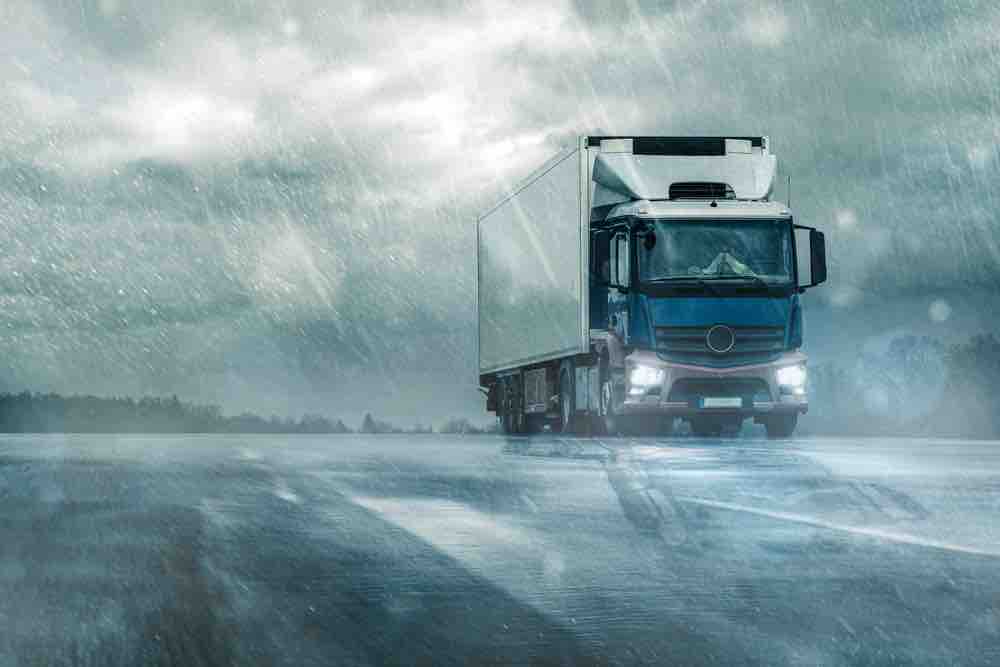
“Extreme caution in the operation of a commercial motor vehicle shall be exercised when hazardous conditions, such as those caused by snow, ice, sleet, fog, mist, rain, dust, or smoke, adversely affect visibility or traction.”
The regulations go on to indicate that a truck driver must reduce their speed when hazardous conditions exist. And if the hazardous conditions are sufficiently dangerous, the truck driver must discontinue driving the tractor-trailer and refrain from operating on the highways until the conditions improve.
The regulations require truck drivers to assume heightened responsibility when hazardous conditions exist, because a big rig, which can weigh up to 80,000 pounds, can literally wreak havoc on passenger cars and pickup trucks and wipe out whole families in a fraction of a second.
This single regulation may be the most important safety regulation for preventing truck accidents in the entire set of regulations. The number of truck wrecks that occur when a hazardous condition exists is fairly significant.
When the conditions require a truck driver to discontinue operation, the truck driver must find a place to pull over safely, and if compliance with the rule would increase a hazard to passengers, the truck can be operated to the nearest point at which the safety of the passengers can be assured.
Many semi-truck accidents could have been prevented simply by a truck driver reducing their speed or pulling off the roadway until the rain, fog, or other visibility impairment improved. If you have questions regarding a truck accident, speak with the best truck accident attorney you can find as soon as possible after the accident.
We have won millions in cases involving drivers who violated the adverse-weather rule and other safety regulations —we can help you too!