 Request FREE consultation - 1866-758-4529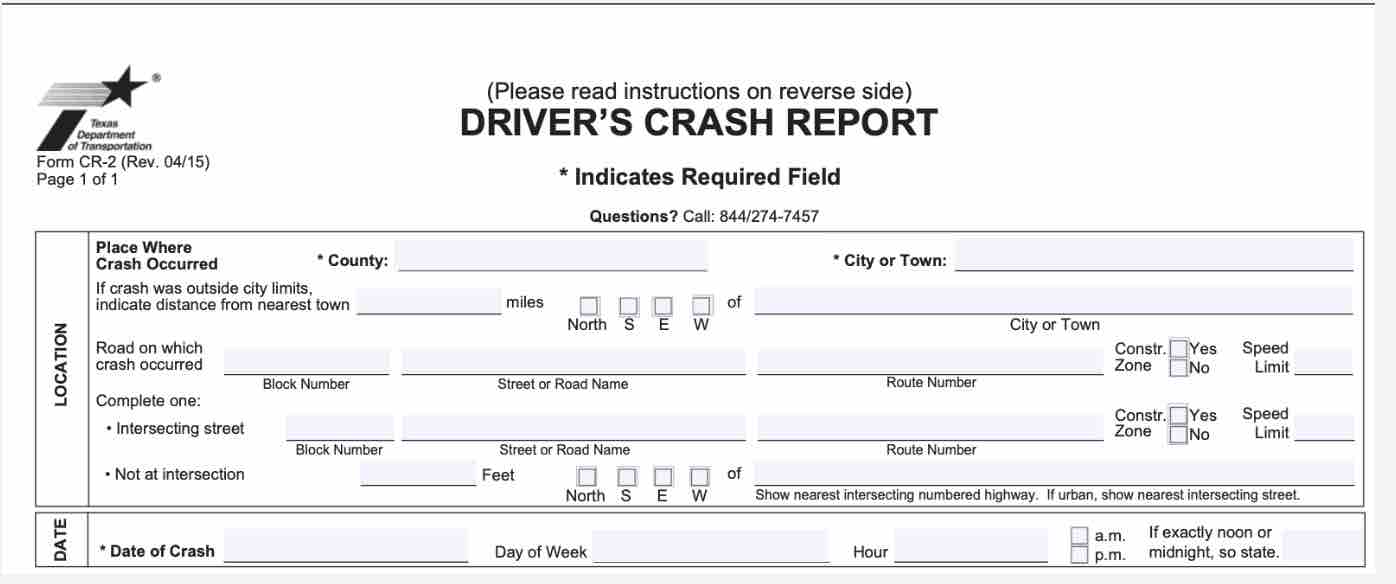
A police report is key evidence after a commercial truck accident. In cases involving 18-wheelers, delivery trucks, or other commercial vehicles, the official crash report often forms the basis for insurance claims, investigations, and lawsuits.
Texas law enforcement agencies create crash reports that document collision details, identities of those involved, roadway conditions, and initial findings. These reports often influence liability decisions and insurer evaluations.
Anyone injured in a commercial vehicle crash should know how to obtain the police report. They should also understand what information it contains and how it can support a legal claim.
A truck accident police report is the official record created by a responding police officer at the crash scene. In Texas, this is known as the Texas Peace Officer’s Crash Report (CR-3).
The report is typically completed when:
• The crash causes injury or death
• Property damage exceeds $1,000
• A commercial vehicle is involved
• Law enforcement responds to investigate the collision
Truck accident reports usually have more details than regular car accident reports. Truck crash cases may include company or federal rules, driver qualifications, and cargo details.
A Texas CR-3 crash report includes several sections that provide important details about the crash.
The report shows basic information for every person and vehicle involved in the crash, including full names and addresses, driver’s license numbers, insurance details, vehicle license plate numbers, and truck ID numbers.
In truck accident reports, the report may also list the trucking company’s name, its U.S. DOT number, trailer numbers, and what the truck was carrying.
The crash report records the date, time, and location of the accident. It often notes the highway or roadway, mile markers, intersections, city, county, and direction of travel.
This information assists investigators in reconstructing the crash and identifying the responsible jurisdiction.
The officer’s narrative summary describes the crash. It relies on evidence such as witness statements, vehicle damage, and road markings.
While this narrative does not determine legal fault, insurers and attorneys often rely on the officer’s observations.
Most police reports include a drawing showing how the crash happened. The drawing usually shows where the vehicles were before the crash, which way they were going, where they hit, and how the lanes were set up.
In truck accidents, this diagram shows lane changes, turns, and braking. Diagrams are often compared with other evidence, such as photographs. Contributing Factors and Violations.
The report may also list factors the officer believes contributed to the crash, such as:
• Driver fatigue
• Unsafe Lane changes
• Following too closely
• Speeding
• Failure to yield
The officer may also indicate if a citation was issued.
Independent witnesses often provide crucial accounts of the crash. The police report typically lists:
• Witness names
• Contact information
• Statements given at the scene
This information enables attorneys and investigators to follow up with witnesses.
Texas crash reports are available from the Texas Department of Transportation (TxDOT) or the law enforcement agency that investigated the accident.
The Texas Department of Transportation keeps a statewide crash report database. Law enforcement agencies submit their reports to this database.
A copy of the report can typically be requested by:
• Visiting the TxDOT Crash Report Online Purchase System
• Submitting a written request form
• Requesting the report through the mail
To request a report, provide the crash date and location. You must also include the name of at least one involved driver.
Crash reports can also be obtained directly from the responding law enforcement agency.
In the Houston area, agencies handling truck accidents include the Houston Police Department, Harris County Sheriff’s Office, Texas Department of Public Safety, and local police.
Each agency typically has a records division. Reports can be requested there in person or online.
Texas law restricts access to crash reports. Only certain individuals and entities may view them.
People who can get a report include those involved in the crash, their representatives, their insurance companies, lawyers representing injured people, and the employers of the truck drivers involved in the crash.
These restrictions help protect the privacy of those involved in collisions.
After a truck accident occurs, the investigating officer must submit the crash report to the appropriate database. Most Texas crash reports become available within 3 to 10 days after an accident. Complex cases involving serious injuries, fatalities, or commercial vehicles may take longer.
Once submitted, the report is uploaded to the TxDOT system and can then be requested.
Truck accidents often involve multiple parties and complex liability issues. A police report provides essential information for investigations.
Key benefits of the report include:
• Identification of every party involved in the crash
• Documentation of roadway conditions and vehicle damage
• Statements from drivers and witnesses
• The officer’s initial assessment of the collision
Trucking companies and insurers often begin investigating immediately. Obtaining the police report promptly helps secure key evidence.
Accident reports serve as a starting point for attorneys and insurance adjusters handling injury claims and investigations.
Other evidence may include truck computer logs, the driver’s work history, truck repair records, records of what was being carried, black box data, and video from the truck’s cameras.
Using the crash report with these records helps investigators better determine the cause of the accident.
Police officers often complete crash reports quickly while managing busy accident scenes. This can sometimes result in inaccuracies or missing information.
Common problems include failing to list the correct positions of vehicles, omitting witness statements, leaving out injury details, and making mistakes in the driver’s basic information.
If errors are found in a report, you may request a correction.
Additional evidence can also supplement the investigation.
Once the police report is obtained, review it carefully for accuracy and completeness.
• Verifying driver and insurance information
• Identifying witnesses listed in the report
• Reviewing the officer’s narrative
• Preserving the report as part of the accident record.
This information helps establish a crash timeline and serves as a foundation for further investigation.
In serious truck accident cases with catastrophic injuries or deaths, the police report is often one of the first documents reviewed by attorneys, insurers, and investigators.
While the report does not determine legal liability, it often shapes how claims are evaluated and may influence:
• Insurance negotiations
• Settlement discussions
• Expert accident reconstruction
• Trial preparation.
Commercial trucking cases often involve multiple defendants, such as drivers, motor carriers, cargo companies, and maintenance contractors. The police report frequently serves as the starting point for a thorough investigation.
Truck accident investigations require careful documentation and the preservation of evidence. The official crash report is important but represents only one part of the overall case.
Accurate documentation of the collision scene, vehicle damage, witness statements, and trucking company records is essential to determine how and why the crash occurred.
If you are involved in a truck accident, promptly obtain the police report. Then contact a knowledgeable Houston trucking accident attorney serving Baytown, TX, to understand and protect your rights throughout the claims process. Act quickly to ensure you have the information and assistance necessary to pursue your claim.
(281) 893-0760 CALL NOW!
Related Resources: