 Request FREE consultation - 1866-758-4529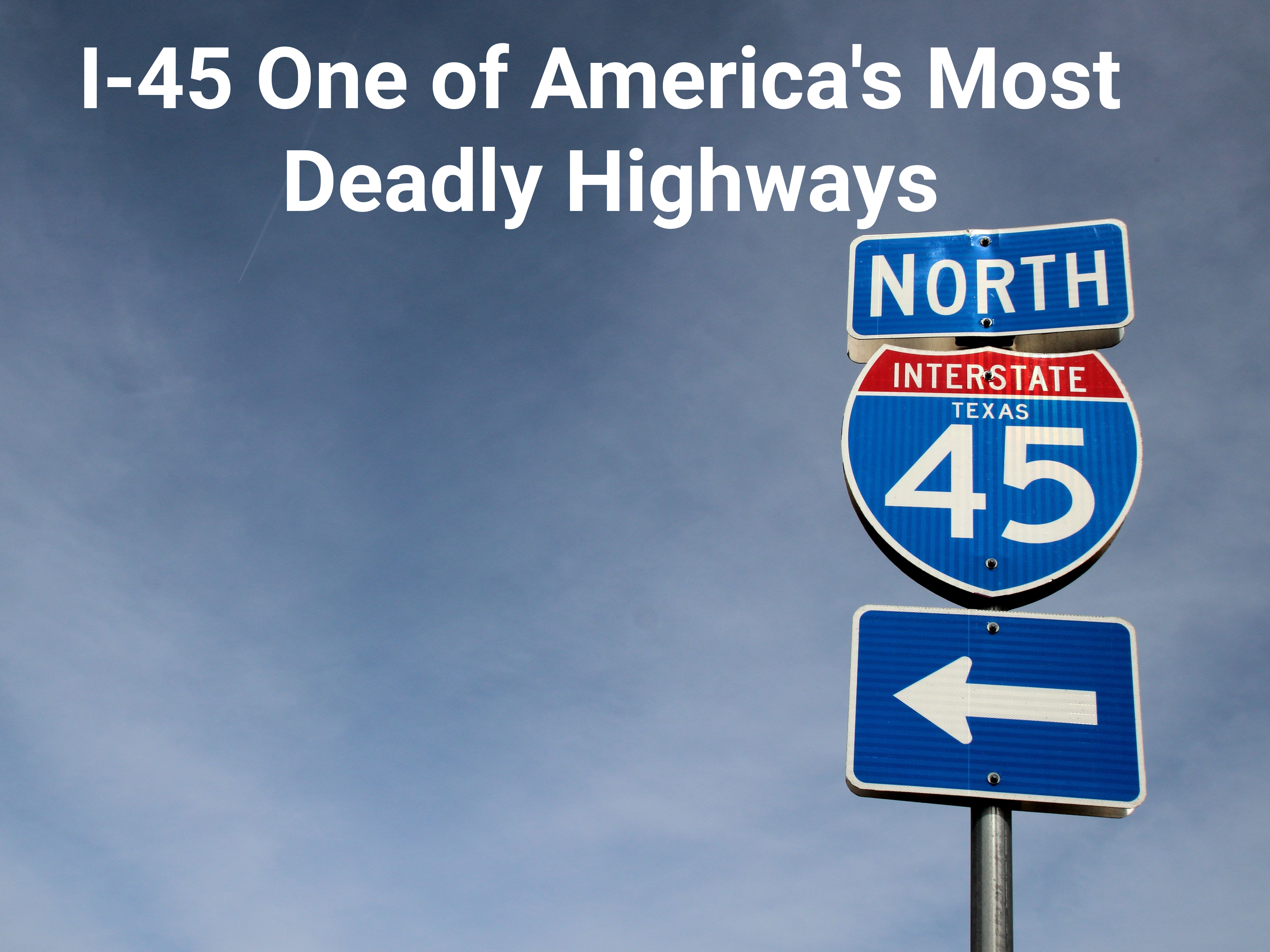
Updated September 2026 | Reviewed by Greg Baumgartner, Texas truck accident lawyer
| Quick answer: I-45 is considered one of America’s deadliest highways because it combines high-speed travel, severe Houston congestion, heavy commercial-truck traffic, complicated interchanges, sudden rain, and long-term construction. A historical national study reported 56.5 fatal crashes per 100 miles. A later study found that I-45 had more fatal crashes in Harris County than any other road during 2018-2020. Those numbers come from different study periods and are not current annual rates. |
Interstate 45 never leaves Texas. It connects Galveston, Houston, and Dallas while carrying commuters, tourists, port traffic, delivery vehicles, and 18-wheelers. The route is essential. It can also leave very little room for error when fast traffic suddenly meets a stopped lane.
A 2021 national highway study reported by ABC13 ranked I-45 as the deadliest road in the United States, with 56.5 fatal crashes for every 100 miles in the study. That figure is historical, not a current yearly rate. A MoneyGeek analysis of Texas fatal crashes found that I-45 recorded 45 fatal crashes in Harris County from 2018 through 2020 – more than any other road in the county.
After more than 40 years of handling serious truck cases, I have learned to be careful with simple explanations. A police report may say a driver failed to control speed. That does not explain why. The fuller answer may be in driver logs, dispatch messages, camera footage, maintenance files, or cargo records. – Greg Baumgartner
| Source | Finding | How to read it |
| 2021 national study | 56.5 fatal crashes per 100 miles on I-45. | A historical rate from that study, not a current yearly rate. |
| MoneyGeek FARS analysis | 45 fatal I-45 crashes in Harris County; 11 fatal crashes and 12 deaths from Exit 63 to Exit 59. | Based on 2018-2020 records, even though the article was updated in 2026. |
| TxDOT 2025 data | 86,384 distracted-driving crashes, 2,437 serious injuries, and 299 deaths. | Statewide Texas data; it is not limited to I-45. |
Crash patterns change. For the newest statewide reports, use TxDOT’s annual Texas motor vehicle crash statistics. Older rankings remain useful, but they should not be presented as a permanent list of today’s most dangerous locations.
Traffic on I-45 may be moving at highway speed one moment and almost stopped the next. A driver who follows too closely or looks away may not have enough time to react. The risk rises when a tractor-trailer is behind the slowing traffic.
FMCSA safety guidance for truck and bus drivers warns that a large truck traveling at highway speed may need up to two football fields to stop. Wet pavement, a heavy load, worn brakes, or excess speed can make the needed distance even longer.
Speed cuts reaction time and increases the force of a crash. It also makes a sudden I-45 backup much harder to handle. In MoneyGeek’s 2018-2020 statewide analysis, speeding was linked to 31.3% of fatal crashes.
Distraction is another major risk. According to TxDOT’s 2025 distracted-driving report, distraction contributed to 86,384 crashes across Texas, causing 2,437 serious injuries and 299 deaths. These are statewide numbers, but the danger is easy to understand on I-45. A few seconds spent on a phone can be enough to miss brake lights, debris, a lane closure, or a short entrance ramp.
I-45 is an important freight route between Galveston, Houston, and Dallas. Passenger vehicles often travel beside 18-wheelers, tankers, dump trucks, and delivery vehicles. A truck’s size changes both the likelihood of a crash and the harm that can follow one.
Trucks also have wide blind spots. A missed mirror check, last-second lane change, or slow reaction in stop-and-go traffic can cause a rear-end crash, sideswipe, rollover, or multi-vehicle collision.
Houston rain can reduce visibility and tire grip within minutes. Standing water raises the risk of hydroplaning. It also leaves every driver with less room to correct a mistake.
FMCSA guidance on driving too fast for conditions explains why commercial drivers must adjust for weather, curves, heavy traffic, and construction. Our guide to truck accidents caused by bad weather in Texas discusses how speed, tires, visibility, and driver decisions should be examined together.
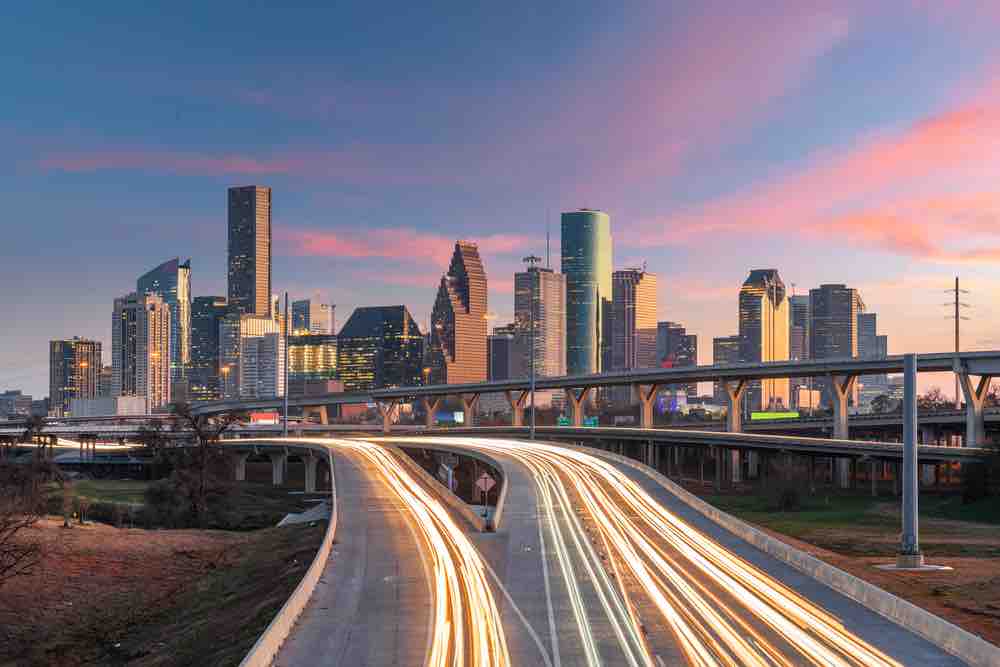
I-45 connects with I-10, I-610, I-69, and Beltway 8 in Houston. Drivers may be entering, exiting, slowing, and crossing lanes at the same time. The downtown connections are especially demanding for anyone who does not know the route.
No part of I-45 is risk-free. Still, MoneyGeek’s review of 2018-2020 fatal crashes ranked I-45 from Exit 63 to Exit 59 as the seventh-deadliest road segment in Texas. The 4.6-mile section had 11 fatal crashes and 12 deaths during the study period.
| Area | Location | Conditions drivers may face |
| Exit 63 to Exit 59 | North Houston | A studied concentration of fatal crashes; local and through traffic meet near busy exits and major roads. |
| Downtown connections | I-10, I-69, and SH 288 | Weaving, unfamiliar exits, changing lanes, and active construction. |
| Major North Freeway interchanges | I-610 and Beltway 8 | Entering and exiting traffic can create sudden braking and lane changes. |
| Gulf Freeway | Downtown to Galveston | Commuters, freight, tourist traffic, hard rain, and standing water. |
These descriptions are not a claim that every crash happens at these locations. They show why the type of traffic, the road design, the weather, and current construction must be considered when evaluating risk.
Construction on the North Houston Highway Improvement Project began in October 2024. The long-term project will rebuild major freeway sections and interchanges and eventually reroute I-45 around downtown along parts of I-10 and I-69. TxDOT says the full program is expected to take many years.
The finished project is intended to improve safety, drainage, and traffic flow. During construction, drivers may face temporary barriers, lane shifts, closed shoulders, work vehicles, detours, and changing exits. Those conditions make patience and following distance even more important.
Before traveling through the downtown project area, check TxDOT’s current I-45 construction and closure updates.
A serious truck crash is not just a larger car accident. Commercial drivers and motor carriers must follow special safety rules. More than one company may share responsibility, and much of the most useful evidence may be controlled by the trucking company or its insurer. Our I-45 truck accident lawyer page explains these claim issues in more detail.
Common causes of serious I-45 truck crashes include:
The responsible parties may include the driver, motor carrier, maintenance contractor, cargo loader, equipment manufacturer, or another motorist. A careful review of who may be responsible for a truck accident helps prevent an important defendant or insurance policy from being missed.
In my experience, the early investigation often decides whether critical proof is found or lost. Trucking companies and insurers may begin protecting their position right away. An injured person should not assume every useful record will be kept automatically.
A safety-rule violation does not automatically prove the whole case. It may, however, explain why the crash occurred and whether a company ignored a risk it knew or should have known about.
I-45 combines high speeds, heavy traffic, large commercial trucks, sudden congestion, complicated interchanges, hard rain, and years of construction. Historical studies have also found a high concentration of fatal crashes on the highway, especially in Harris County.
MoneyGeek’s 2018-2020 analysis ranked I-45 from Exit 63 to Exit 59 among Texas’ ten deadliest road segments. Crash patterns change, so current TxDOT data should also be reviewed before calling any one section the most dangerous today.
An 18-wheeler can weigh many times as much as a passenger vehicle. Large trucks also need more room to stop and have wide blind spots. The force of impact can cause brain injuries, spinal injuries, fractures, internal injuries, burns, or death.
Yes. A motor carrier may be responsible for a driver’s work-related negligence. It may also face separate claims for unsafe hiring, poor training, weak supervision, pressure to break safety rules, or failure to maintain the truck.
Important evidence may include electronic logs, black-box data, truck video, dispatch records, cellphone data, driver files, maintenance records, cargo documents, photographs, and witness accounts. The exact evidence depends on how the crash happened.
Texas generally allows two years for personal injury and wrongful death lawsuits under Texas Civil Practice and Remedies Code Section 16.003. Exceptions and shorter-notice rules may apply. It is safer to investigate promptly than to wait for the deadline.
I began representing injured Texans in 1985. I have seen how quickly a serious truck crash can place a family under pressure from medical bills, lost income, and an insurance company that wants answers before the family has them.
Baumgartner Law Firm limits the cases it accepts so each client can receive personal attention. If you or a family member suffered a serious injury on Interstate 45, review your options with an experienced I-45 truck accident lawyer before important evidence disappears. If the crash caused the loss of a loved one, our fatal truck accident claim page explains the issues families may face.
Free consultation: (281) 893-0760. No fee unless we win.
Contact us for a FREE Injury Accident Consultation. (281) 893-0760
Related Resources:
Interstate 10 Truck Accident Lawyer
Adverse Weather and Truck Wrecks