 Request FREE consultation - 1866-758-4529
By Texas personal injury lawyer Greg Baumgartner.
A truck driver or trucking company may be responsible when unsafe parking contributes to a crash. Hitting the back of a stopped 18-wheeler does not, by itself, answer who caused the wreck. Where the truck stopped, why it stopped, and whether approaching drivers had fair warning all matter.
If your family is facing this situation, you may already have heard that the crash was your fault. The evidence deserves a closer look before anyone reaches that conclusion.
My first truck accident case, in 1985, involved a fatal collision with a parked semi-truck. The driver we represented had been drinking. That made the case difficult, but it did not end the investigation. We pursued evidence that the truck had been parked illegally, partly on the highway. The insurer settled shortly before trial.
That experience shows why the point of impact is only part of the story. The condition of the person driving the car mattered. So did the decision to leave a truck in a dangerous place. Both deserved careful attention. The case is discussed in our account of handling Texas truck accident claims. Past results do not guarantee a similar outcome.
A breakdown may force a truck driver to stop. Parking to sleep, check directions, or wait for dispatch raises different questions. A useful investigation separates the reason for the stop from the steps taken afterward to protect other drivers.
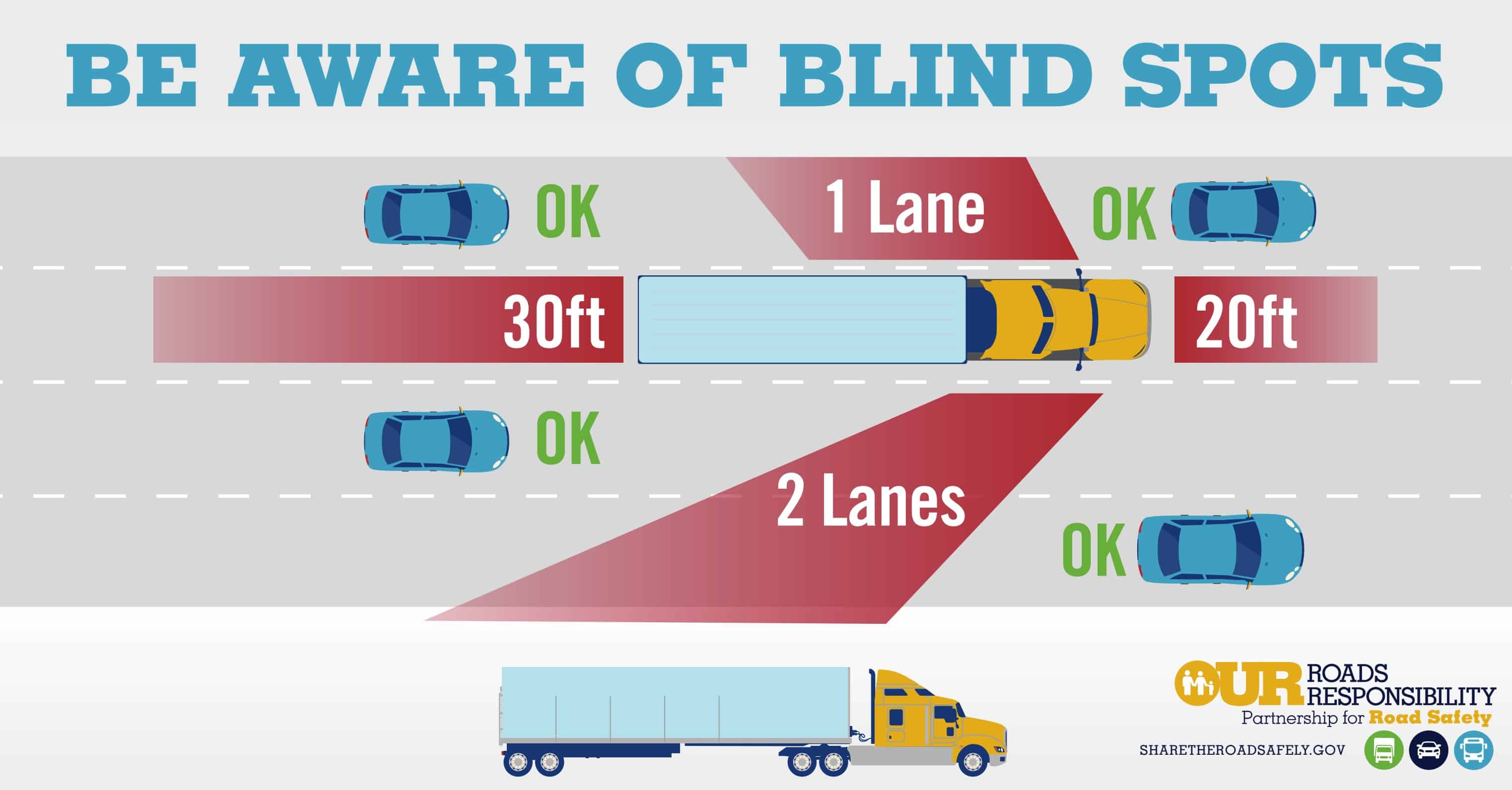
Consider a trailer extending across the shoulder line into a travel lane. At night, an approaching driver may see its outline too late to avoid it. A truck stopped beyond a curve presents another problem: the driver may have little sight distance, even with headlights on.
The question is not simply whether the truck had stopped. It is whether its position and the available warnings created a danger that helped cause the collision. A necessary stop does not automatically excuse every action that follows it.
49 CFR § 392.22, the federal stopped-truck warning rule, generally requires the use of immediate hazard flashers at covered highway or shoulder stops other than necessary traffic stops. Required warning devices must be placed within 10 minutes. Flashers do not replace them.
On a divided or one-way highway, devices generally go 100 and 200 feet toward approaching traffic, with another on the truck’s traffic side within 10 feet of its rear. On a typical two-way road, the layout generally includes a device near the traffic side and one about 100 feet in each direction.
For certain obstructed views, the rule calls for a warning device 100 to 500 feet toward the obstruction. A municipal business or residential district has a specific exception tied to lighting and visibility. The roadway and conditions must be checked before applying a layout.
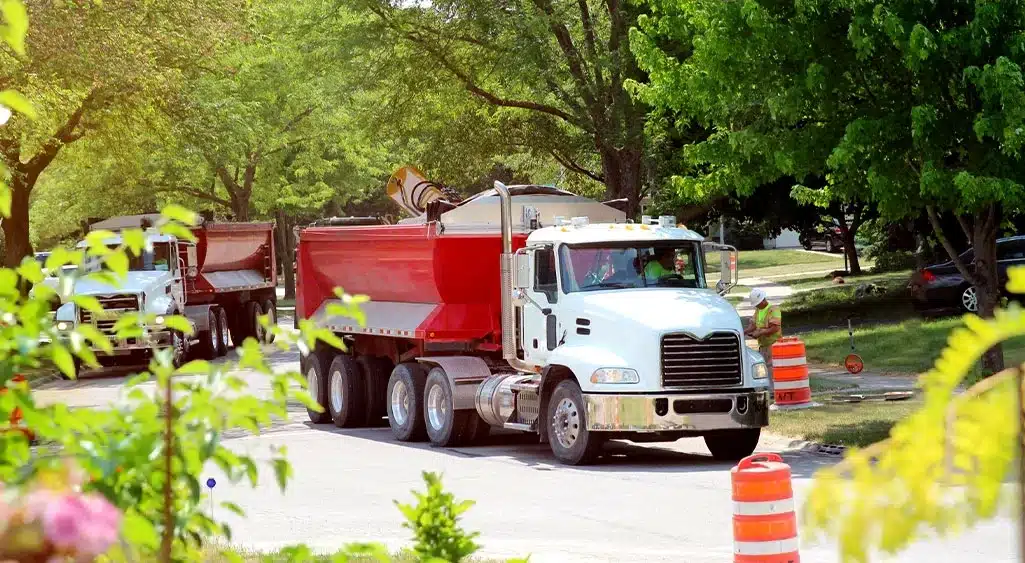
Scene evidence should answer a simple question: what could an approaching driver actually see, and when? A photograph taken in daylight may tell a different story than one taken at a collision that happened before sunrise.
Useful evidence includes photographs of the truck’s wheels, trailer, lane markings, shoulder width, lights, and warning devices. Witnesses may know whether the truck moved after impact or whether triangles appeared only after the crash.
The timeline matters as much as the final photograph. A triangle visible when an officer arrives does not establish that it was there before the collision. Dispatch messages, location records, emergency calls, and video may help establish when the truck stopped and what happened next.
A claimed breakdown should be compared with repair records, driver reports, and the truck’s condition. If the driver stopped to rest, location records and communications may explain how that parking spot was chosen.
Evidence requests should fit the facts. A stopped vehicle may have useful GPS or camera records even when its engine computer does not answer the key question. Preserving the truck alone may miss the records that explain why it was there.
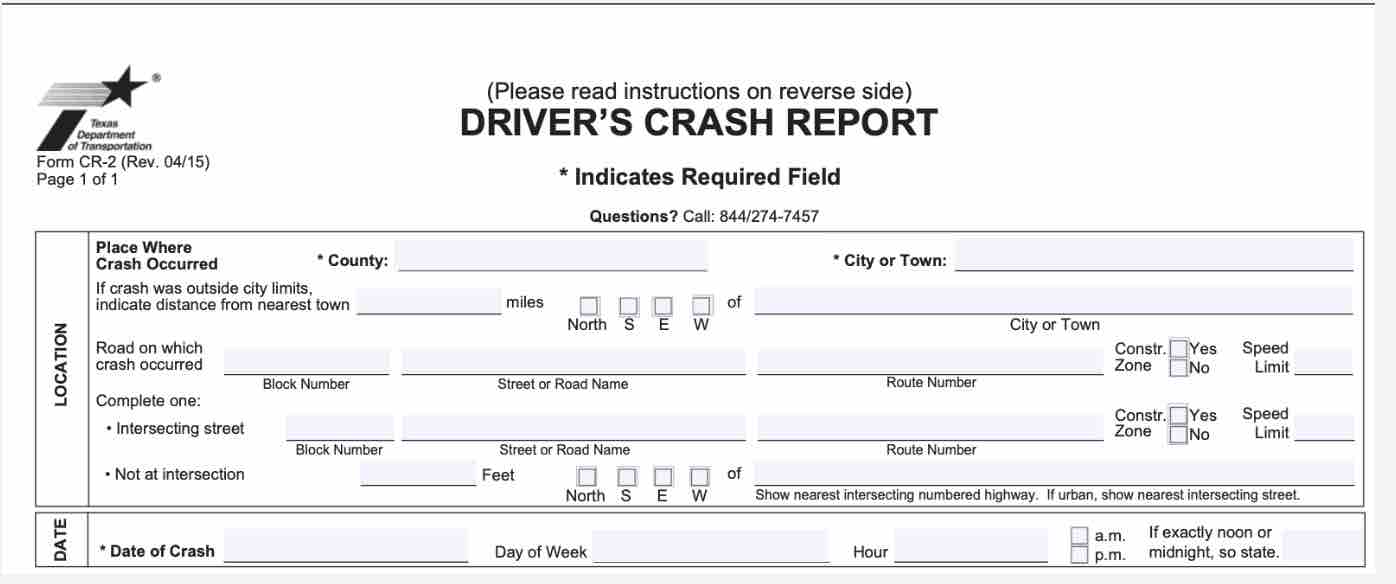
Investigators may examine roadway lighting, weather, reflectors, sight distance, and vehicle damage. Video and independent witnesses can help test each driver’s account. Read the Texas truck accident police report, but treat it as a starting point for questions, not the entire investigation.
Fault can be shared. Under Texas Civil Practice and Remedies Code § 33.001, a claimant who is more than 50 percent responsible cannot recover damages in an action covered by that chapter. At 50 percent or less, recovery may still be possible, but § 33.012 reduces damages by the claimant’s share of responsibility.
For example, a finding that the injured driver was 20 percent responsible would reduce $100,000 in damages to $80,000 before other applicable adjustments. A claim that you were distracted or speeding is an issue to be investigated; it is not a final decision in your case.
The trucking company’s role also needs to be reviewed. Who employed the driver? Who controlled the trip? Was a known mechanical problem ignored? Company responsibility depends on the evidence and the legal basis for the claim, not simply whose name appears on the trailer.
Call 911 and get needed medical care. Stay clear of traffic and follow emergency responders’ instructions. Do not step onto the highway to photograph warning devices or measure distances.
If it can be done safely, preserve photographs, witness contact details, and any dashcam recording. Keep the original files. Ask for help preserving the vehicles and relevant records before repairs, disposal, or routine deletion make the evidence harder to obtain.
Keep medical bills, work-loss records, and notes about how your injuries affect daily life. For a broader checklist, see what to do after an 18-wheeler accident in Texas.
No. The truck’s location, warnings, visibility, and the conduct of both drivers must be examined. A rear impact alone does not settle responsibility.
Not automatically. A breakdown may explain the stop, but the warning measures and other reasonable safety steps still need to be reviewed.
Possibly. Whether the truck encroached on a lane, how visible it was, and how the collision occurred can affect the claim. Being on the shoulder does not decide the case by itself.
Other evidence may still help. Witnesses, video, tire marks, debris, police observations, and vehicle damage may help reconstruct the original position. Preserve what remains promptly.
When a serious crash leaves a family searching for answers, the first explanation is not always the complete one. My work on parked-truck cases began in 1985. The focus here is on the details that can explain why the collision happened.
Call (281) 893-0760 for a free consultation with our Texas truck accident lawyer. Tell us where the truck stopped, what you know about the warnings, and what the insurer has said. We can discuss whether the facts warrant a closer investigation.