 Request FREE consultation - 1866-758-4529
Yes. A Texas driver can be stopped or ticketed for driving so slowly that the vehicle impedes the normal and reasonable movement of traffic. But merely driving below the posted speed limit is not automatically illegal. A slower speed may be necessary because of rain, fog, traffic, construction, a mechanical problem, or another safety condition.
The real question is not simply how many miles per hour the driver was traveling. It is whether that speed was reasonable for the road and whether it interfered with normal traffic. When a slow-moving 18-wheeler creates an unexpected hazard on a Texas highway, the same facts may also become important in deciding who is responsible for a crash.
The main rule appears in Texas Transportation Code § 545.363. It prohibits driving so slowly that a vehicle impedes the normal and reasonable movement of traffic. The statute makes an important exception when the reduced speed is necessary for safe operation or required by law.
Texas does not set one statewide minimum speed for every highway. A government authority may establish a minimum speed for a particular road after a traffic and engineering investigation. When a minimum is properly adopted and posted, drivers generally must obey it unless slower travel is necessary for safety or compliance with the law.
There is also no automatic Texas rule that driving 10 or 15 mph below the speed limit is always illegal. An officer must consider the actual conditions, including traffic flow, visibility, weather, road type, and the reason the driver slowed down.
Driving below the speed limit may be the safest and legally proper choice when:
Commercial drivers may have an added duty to reduce speed in hazardous conditions. Federal Motor Carrier Safety Regulation 49 C.F.R. § 392.14 requires extreme caution when conditions such as snow, ice, rain, fog, dust, or smoke affect visibility or traction. If conditions become dangerous enough, covered commercial-vehicle drivers must stop until the vehicle can again be operated safely.
For more on that duty, see our discussion of truck accidents caused by bad weather in Texas.
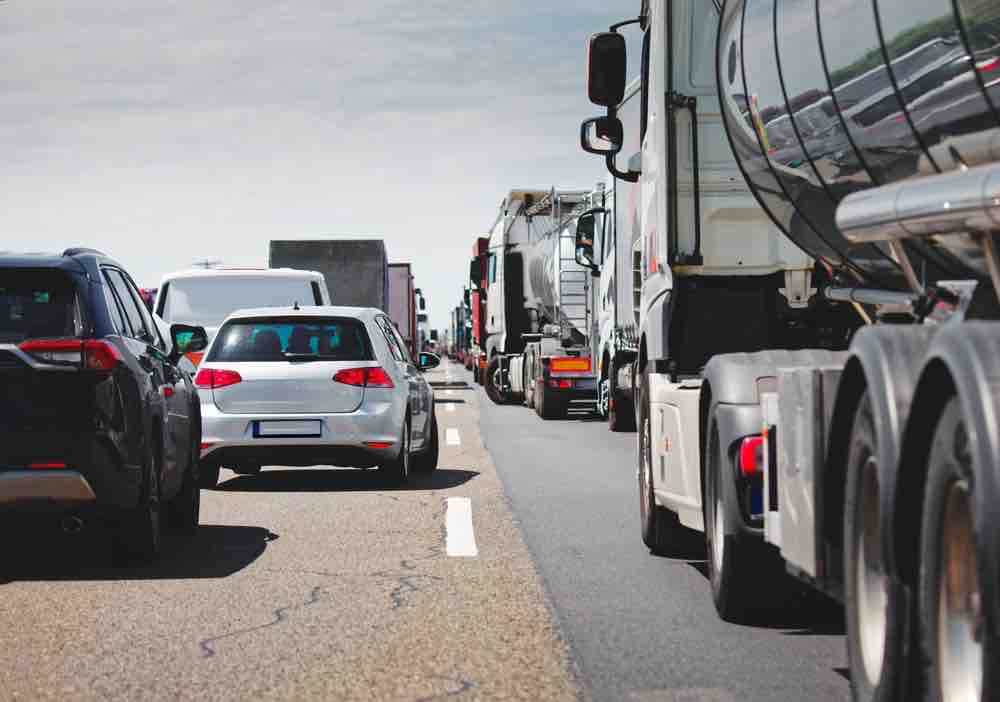
A large difference in speed can create a serious highway hazard. A driver approaching from behind may not immediately realize that a truck is moving far more slowly than surrounding traffic. The closing distance can disappear quickly, especially at night, over a hill, or around a curve.
A slow-moving truck may cause other drivers to brake suddenly, change lanes, or attempt unsafe passes. That does not excuse reckless conduct by another motorist. It does mean that the truck driver’s speed, lane position, lighting, and reason for moving slowly deserve a careful investigation.
FMCSA’s large-truck safety guidance also reminds motorists that large trucks have significant blind spots and need extra space to stop and maneuver. Those limits can make an unexpected speed difference even harder to manage.
Usually, yes. On a multilane highway, slower traffic should generally remain to the right unless the driver is passing, preparing for a left turn, avoiding a hazard, or another exception applies. Texas Transportation Code § 545.051 contains Texas’s general right-side-of-the-road rule and its exceptions. Posted “Left Lane for Passing Only” signs may impose additional requirements.
A tractor-trailer traveling well below the flow of traffic in a passing lane can force vehicles to weave around it. Lane position may therefore be as important as speed in investigators’ reconstruction of the collision.
Yes, depending on the evidence. A slow driver may bear responsibility when an unreasonably low speed helps cause a collision. A traffic citation may be relevant, but it is not required before civil responsibility can be considered.
The following driver is not automatically free from fault. Drivers must pay attention, maintain a reasonable following distance, and respond to traffic ahead. Under Texas comparative-responsibility rules, a jury may divide fault among the truck driver, motor carrier, following driver, and any other responsible party.
Our guide to finding fault after a Texas truck wreck explains why several acts or omissions may combine to cause one crash.
“I would not assume the police report tells us why the truck was moving slowly. I want the truck’s electronic data, GPS history, dash-camera footage, maintenance records, warning-light information, and dispatch communications. Those records may show whether the driver had a mechanical problem, whether the company knew about it, and why the truck remained on the highway.”
— Greg Baumgartner
After more than 40 years handling commercial-vehicle cases, Greg’s approach is to test the simple explanation against the objective records. Important evidence may include:
Some electronic evidence may be overwritten in the ordinary course of business. Prompt preservation is especially important when the crash caused a serious injury or death.
Our guide to what to do after a commercial-vehicle accident provides additional practical steps.
Yes, if the driver travels so slowly that the vehicle impedes normal and reasonable traffic without a valid safety or legal reason. Driving below the posted maximum alone does not automatically establish a violation.
Texas law does not set one universal number. The issue depends on traffic, weather, visibility, road design, posted minimum-speed signs, and the reason for the reduced speed.
Texas has no single minimum that applies to every highway. A minimum speed may be established and posted for a particular roadway after the required investigation.
It can be. Texas generally requires drivers to use the right side of the roadway, subject to statutory exceptions, and drivers must obey posted passing-lane signs.
Yes. The driver or motor carrier may be responsible when unreasonable slow driving, unsafe lane use, poor warnings, or a known mechanical problem contributes to the collision.
Yes. A following driver may share responsibility for inattention, excessive speed, or an unsafe following distance. Texas law allows responsibility to be divided among the people and companies whose conduct caused the crash.
If you or a family member suffered a serious injury in a crash involving a slow-moving 18-wheeler or commercial vehicle, contact an experienced Texas truck accident lawyer to discuss what happened and what evidence should be preserved. Greg Baumgartner has handled commercial-vehicle cases for more than four decades and remains selective so he can give each accepted case personal attention.
The consultation is free. There is no attorney’s fee unless compensation is recovered. Call Greg at (281) 893-0760.