 Request FREE consultation - 1866-758-4529
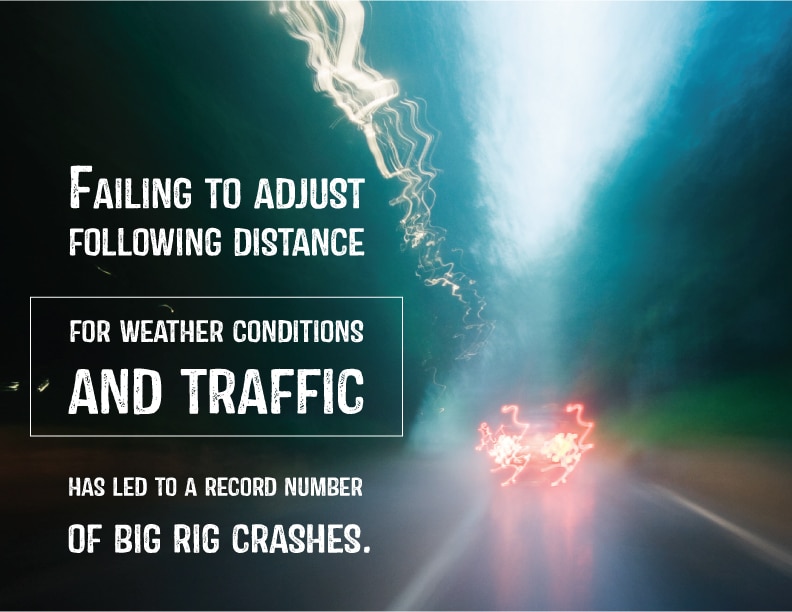
Texas law requires an 18-wheeler driver to leave enough room to stop safely for the speed, traffic, and road conditions. There is no single number of feet or seconds that works in every situation. If a semi-truck hits you from behind, one of the first questions I ask is how much room the driver had when traffic ahead began to slow.
Texas Transportation Code § 545.062(a) requires a driver to leave enough space to stop without hitting the vehicle ahead or swerving into another vehicle, object, or person. The same rule applies to a truck driver, whether the truck is traveling at highway speed or inching through traffic.
Say traffic starts to bunch up on I-45. A truck driver who sees brake lights ahead can slow down early and leave more room. If a car moves into that space, what matters is when it moved over and how much time the truck driver had to slow down or open the gap again.
The FMCSA’s guidance on following too closely recommends at least one second of space for every 10 feet of vehicle length at speeds below 40 mph. Above 40 mph, the agency recommends adding another second. For a 60-foot rig, that works out to at least six seconds below 40 mph and seven seconds above it. These are safety guidelines. The Texas statute measures the gap against the conditions at the time.
Rain, fog, or slick pavement can call for more room. For commercial vehicles covered by 49 C.F.R. § 392.14, drivers must use extreme caution and reduce speed when hazardous conditions impair visibility or traction.
A truck keeps moving while its driver sees the hazard and reacts. The brakes then need time and distance to bring the rig to a stop. Speed, road grade, tire condition, and the condition of the brakes can all affect the distance. My guide to 18-wheeler stopping distance explains what goes into those estimates.
I start with the seconds before impact. When a truck driver says a car cut in or traffic stopped without warning, I want to know when the car entered the lane, how long it was ahead of the truck, and when the truck driver first slowed or braked. The best way to answer those questions is to compare records from the same stretch of time.
I look for those records early in a semi-truck crash investigation. Video can be overwritten, and a truck may be repaired before anyone can inspect it.
Save any original dashcam footage, photos, and witness contact information you have. If the truck driver says you cut in or stopped suddenly, write down what you remember about when you entered the lane and when traffic began to slow. Here are more steps to take after an 18-wheeler rear-ends you.
If you were seriously injured in a Texas truck crash, you can request a free consultation with truck accident attorney Greg Baumgartner Tell me what happened in the seconds before impact. That gives me a starting point for identifying what evidence may still be available.
Rear-end Accidents Involving Commercial Trucks