 Request FREE consultation - 1866-758-4529
Houston is a major freight hub, with thousands of commercial trucks moving through the city daily. This means that Houston highways with the most truck accidents are especially dangerous for drivers. This volume creates a serious risk. Certain highways repeatedly see more truck crashes due to heavy traffic, complex interchanges, poor design, and intense commercial use.
Below, we examine Houston’s most dangerous highways for truck accidents, why these routes are hazardous, and what injured victims should know after collisions with commercial vehicles.
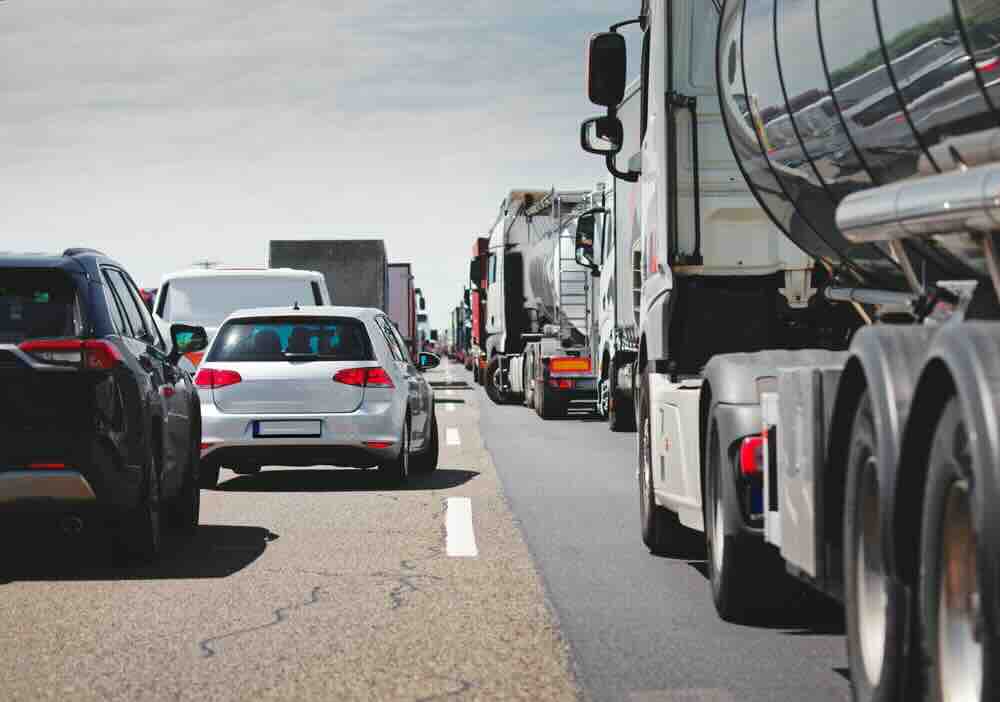
Houston’s highways were built for high traffic, but now carry more vehicles than intended. Mixing heavy trucks with commuters, roadwork, aggressive drivers, and bottlenecks sharply raises danger.
Key risk factors include:
• High truck volume tied to the Port of Houston and industrial zones
• Tight merging areas and multi-level interchanges
• Narrow lanes and aging pavement
• Frequent construction and lane closures
• Long-distance drivers operating under fatigue or delivery pressure
• Speeding and distracted driving in congested traffic
These conditions increase the chance of catastrophic truck crashes on some highways.
Interstate 10 is one of the most dangerous truck corridors in Houston. It runs from downtown through the Energy Corridor, out toward Katy to the west, and east toward Houston. Why is I-10 so hazardous?
Why I-10 is so hazardous
• Extremely high commercial truck volume
• Heavy commuter traffic during peak hours
• Congested feeder roads and entrance ramps
• Constant construction zones
• High-speed traffic mixed with slow-moving trucks
Truck crashes on I-10 frequently involve rear-end collisions, jackknife accidents, lane-change impacts, and multi-vehicle pileups—especially along the stretch near downtown and the I-610 interchange.
Interstate 45 connects Houston to Conroe and Dallas to the north and Galveston to the south. It is one of the city’s busiest trucking routes.
Why I-45 is a major truck accident hotspot:
• Heavy industrial traffic moving between refineries and ports
• Frequent congestion near downtown and the North Loop
• Tight curves and merging lanes
• Aggressive driving behavior
• Long-haul drivers passing through Houston
Truck crashes on I-45 often stem from speeding, sudden slowdowns, fatigue, and unsafe lane changes. Areas near Beltway 8 and the North Freeway are the most dangerous.
Interstate 69, formerly U.S. Highway 59, runs north-south through central Houston and carries massive freight traffic.
Why I-69 is dangerous for truck accidents:
• High truck density near industrial zones
• Congested downtown interchanges
• Frequent stop-and-go traffic
• Narrow lanes and sharp curves
• Distracted and aggressive driving
I-69 truck accidents often involve rear-end collisions, sideswipes, or rollovers from sudden stops or unstable cargo.
Loop 610 circles central Houston, linking major highways. It’s one of Texas’s most complex and congested freeway systems.
Why Loop 610 is a truck accident risk zone:
• Heavy merging traffic from multiple highways
• Tight ramps and short acceleration lanes
• High speeds in certain sections
• Commercial trucks cutting across lanes
• Constant construction
Truck crashes on Loop 610 often occur at interchanges or during lane changes in congestion. The North Loop and Southwest Freeway junctions are especially dangerous.
Beltway 8 is a massive loop around Houston that carries both commuter and heavy truck traffic.
Why Beltway 8 is dangerous for truck accidents:
• High-speed traffic mixed with heavy trucks
• Long stretches of straight road that encourage speeding
• Limited shoulders in some areas
• Congested interchanges
• Frequent lane changes by commercial drivers
On Beltway 8, truck crashes often mean high-speed impacts, rollovers, or serious multi-vehicle collisions.
Highway 290 links northwest Houston to rural and industrial areas. It sees heavy delivery and long-haul truck traffic.
Why Highway 290 is a truck crash hotspot:
• Heavy commercial traffic
• Major construction projects
• Narrow lanes and shifting traffic patterns
• Congested rush-hour conditions
• Aggressive merging behavior
Truck accidents on 290 are usually rear-end collisions, sideswipes, or rollovers caused by unstable loads.
State Highway 225 runs through Pasadena, linking refineries and the Port of Houston.
Why Highway 225 is especially dangerous:
• Extremely high truck traffic tied to industrial shipping
• Hazardous materials transport
• Congested feeder roads
• Aging infrastructure
• Heavy stop-and-go traffic
Highway 225 crashes often result in catastrophic injuries due to the size of tanker trucks and chemical carriers.
U.S. Highway 90 is a main access to the Port of Houston and its industrial areas.
Why Highway 90 is risky for truck accidents:
• Heavy port-related freight traffic
• Congested intersections
• Frequent lane closures
• Commercial trucks entering and exiting traffic
• Speeding on open stretches
Truck crashes on Highway 90 often include underride, rear-end, and dangerous intersection collisions.
Truck accidents cause far more serious injuries than regular car crashes.
Key reasons include:
• The massive weight of 18-wheelers
• Longer stopping distances
• Higher crash forces
• Greater risk of rollovers and jackknifes
• Complex liability involving trucking companies and insurers
Common injuries include traumatic brain injuries, spinal cord damage, multiple fractures, internal organ injuries, and, in the worst cases, wrongful death.
Most Houston truck crashes stem from preventable driver or company errors.
Frequent causes include:
• Driver fatigue
• Speeding and reckless driving
• Distracted driving
• Improper lane changes
• Overloaded or unsecured cargo
• Brake failures and poor maintenance
• Inadequate driver training
• Pressured delivery schedules
These factors make Houston’s busiest highways extremely dangerous.
Victims must act quickly to protect their health and legal rights.
Critical actions include:
• Calling emergency services
• Seeking immediate medical care
• Documenting the crash scene
• Obtaining witness information
• Preserving dash cam and surveillance footage
• Avoiding recorded statements to trucking insurers
• Consulting a qualified truck accident attorney
Truck claims involve complex laws and aggressive insurance defenses.
The above highways are known danger zones. Trucking companies and drivers must use extra caution here.
When they fail to do so, the consequences can be devastating. High-risk highways require:
• Strict compliance with federal trucking regulations
• Proper driver training
• Safe scheduling practices
• Vehicle maintenance
• Responsible cargo loading
• Defensive driving protocols
When companies cut corners, Houston drivers pay the price.
Truck accident claims often involve multiple liable parties. Potential defendants include:
• The truck driver
• The trucking company
• A cargo loading contractor
• A vehicle maintenance provider
• A truck manufacturer
Establishing liability requires:
• Black box data analysis
• Driver logbook review
• Maintenance record audits
• Federal compliance investigations
• Crash reconstruction
Act fast to preserve evidence and prevent tampering in these cases. Early investigation improves your odds of winning an injury accident case.
Victims on Houston’s dangerous highways deserve full compensation for medical bills, lost income, suffering, and disability.
Trucking companies and their insurers often act quickly to minimize payouts.
Injury victims must act quickly to safeguard their legal rights. Here is what injured victims should do after an accident.
The most dangerous Houston highways for truck accidents include
• Interstate 10
• Interstate 45
• Interstate 69 and U.S. Highway 59
• Loop 610
• Beltway 8
• Highway 290
• State Highway 225
• U.S. Highway 90
These corridors consistently have high commercial truck crash rates due to congestion, industry traffic, and infrastructure strain.
Houston’s highways are vital to commerce, but expose drivers to danger when safety is ignored.
The highways listed above remain the most dangerous corridors for truck accidents in Houston.
When trucking companies prioritize speed and profit over safety, catastrophic injuries follow.
Accountability saves lives.
Contact our Houston truck accident attorneys at (281) 893-0760 for your case evaluation.