 Request FREE consultation - 1866-758-4529
Texas has more highways than any other state, and it keeps building more. Every new lane and every new mile carries more freight, which means more 18-wheelers sharing the road with families in passenger cars. The pattern over the years has been hard to miss: as the miles go up, so do the crashes. If you drive in Texas, you already know the feeling of being boxed in by tractor-trailers on the interstate, and the data backs up that uneasy feeling. Our truck accident lawyers have spent decades representing people hurt in those wrecks, and this page explains why the problem keeps growing and what it means if you or someone you love has been injured.
Texas leads the country not just in highway mileage but in how much those highways get used. In 2024, drivers logged roughly 307.49 billion miles on Texas roads, an increase of about 2% over the year before, according to the Texas Department of Transportation’s crash facts. More miles driven means more time and more opportunities for things to go wrong, and the trucks are a big part of that equation.
A few things are driving the steady climb in truck traffic. Texas is the busiest freight state in the nation. It sits at the center of cross-border trade with Mexico under the USMCA agreement, so thousands of commercial vehicles cross the border and fan out across the state every day. On top of that, the oilfields of West Texas and the Permian Basin generate heavy truck traffic on roads that were never designed for that kind of volume. Put simply, the freight has to move, and in Texas, it moves by truck.
The trouble is physics. A fully loaded tractor-trailer can weigh up to 80,000 pounds, roughly 20 times the weight of the average car. That weight means a big rig needs far more room to slow down and stop than a passenger vehicle does. You can read more about how long it takes an 18-wheeler to stop. When you add more of these trucks to more miles of crowded highway, you create more situations where those stopping distances simply run out, and the people in the smaller vehicle pay the price.
The numbers are sobering. In 2024, Texas recorded about 39,393 crashes involving commercial motor vehicles. Those crashes killed 608 people and left 1,601 others with serious injuries, based on TxDOT data. You can explore the full breakdown on our Texas truck accident statistics page, which we update as new state and federal figures are released.
Texas has held the unwanted title of national leader in fatal large-truck crashes for roughly a decade. The most recent federal data compiled through the National Highway Traffic Safety Administration’s Fatality Analysis Reporting System (FARS) shows Texas well ahead of the next-closest state. We have written before about how Texas leads the nation in fatal semi-truck accidents, and unfortunately, that trend has continued.
Long-term, the picture is even more troubling. According to trend data tracked by TxDOT and the Federal Motor Carrier Safety Administration (FMCSA), the number of fatal truck crashes in Texas has risen sharply over the past decade and more, while many other states have stayed relatively flat. And when a crash with a large truck turns deadly, it is usually the people in the other vehicle who are killed, not the truck driver. That is the size-and-weight mismatch playing out in the worst possible way.
Truck traffic is not spread evenly across the state. It concentrates on a handful of major corridors, and those are the same roads where serious truck wrecks happen most often:
Harris County, home to Houston, sees more commercial-vehicle crashes than any other county in Texas, which is no surprise given that the region is one of the nation’s largest hubs for moving goods.
Most serious commercial-vehicle crashes on Texas interstates are investigated by the Texas Highway Patrol, a division of the Texas Department of Public Safety (DPS). For catastrophic and fatal crashes, the agency’s accident reconstruction team uses advanced mapping and surveying equipment to rebuild exactly what happened. In a wrongful death case, that reconstruction often becomes important evidence in the ensuing lawsuit.
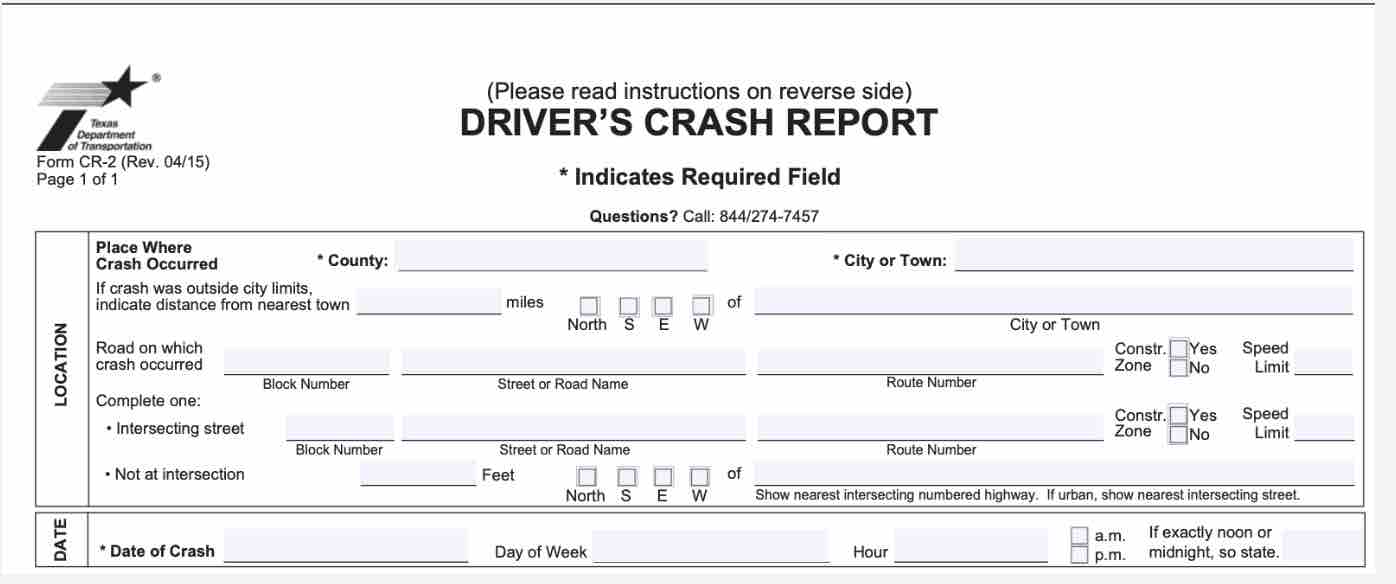
In crashes with less severe injuries, DPS typically prepares a standard crash report that documents the basic facts and the insurance information for everyone involved. Either way, that official record is usually the starting point for understanding who is responsible for a truck accident.
Here is something most people do not realize until it is too late. The insurance company that covers the trucking company often has investigators at the scene of a serious crash within 24 hours of learning about it. In recent years, those insurers have started sending lawyers to the scene before the vehicles are even towed away. Their job is to start building a defense immediately, sometimes while the injured family is still in the hospital.
That head start matters because the most important evidence in a truck case disappears fast. The truck’s onboard electronic data, the driver’s hours-of-service logs, maintenance records, and the vehicle’s physical condition can all be lost, altered, or repaired within days. Issues like driver fatigue and violations of the federal regulations that govern trucking companies only come to light if someone preserves that evidence quickly. That is why getting your own representation early can make such a difference: it lets your attorney investigate before the trail goes cold.
Most personal injury attorneys want truck cases, because the injuries tend to be serious and commercial policies carry higher limits than ordinary auto insurance. But wanting these cases and knowing how to win them are two different things. Truck litigation involves federal motor carrier rules, electronic logging data, corporate defendants, and aggressive defense teams that ordinary car-wreck practice rarely touches.
When you are choosing a lawyer for a trucking case, look for a practice that centers on these wrecks and can point to real results in them. Ask how many truck cases the firm has handled, and how they went.
Greg Baumgartner is a preeminent-rated personal injury lawyer based in Houston with more than four decades of experience representing severely injured clients in truck accident cases. He founded Baumgartner Law Firm in 1985, focusing on excellent legal representation and personal attention for every client.
What is the deadliest highway for trucks in Texas?
There is no single answer, but Interstate 10 and Interstate 45 are routinely among the most dangerous because of the sheer volume of freight they carry. I-10 in particular is often cited as one of the deadliest roads for truckers.
Why are truck accidents so much more serious than car accidents?
A loaded 18-wheeler can weigh up to 80,000 pounds, while a typical car weighs around 4,000. When the two collide, the laws of physics transfer almost all the force to the smaller vehicle. That is why occupants of passenger cars, not truck drivers, account for the large majority of deaths in large-truck crashes.
How long do I have to file a truck accident claim in Texas?
As a general rule, Texas gives injury victims two years from the date of the crash to file a lawsuit, and wrongful death claims generally follow the same two-year window. There are exceptions that can shorten or extend that time, and important evidence can vanish long before the deadline arrives. This is general information, not legal advice for your situation, so it is best to speak with an attorney promptly. You can contact our team for a free consultation to find out how the deadlines apply to you.
Who can be held responsible for a truck accident?
Depending on the facts, responsibility can fall on the driver, the trucking company, a maintenance contractor, the company that loaded the cargo, or others. We explain this in more detail on our page about who is responsible for a truck wreck.
If you or a family member was hurt in a crash with a commercial truck, the other side is already working. The sooner you have an experienced advocate on your side, the better your chances of preserving the evidence that proves your case. Request a free, no-obligation consultation with our Texas truck accident team, or call us anytime at (281) 893-0760.