 Request FREE consultation - 1866-758-4529
When trucking companies push past federal weight limits to squeeze out more profit, the consequences fall on everyone else — longer stopping distances, blown tires, rollovers, and cargo scattered across the highway.
Greg Baumgartner, Texas Truck Accident Lawyer · Est. 1985 · Updated 2026


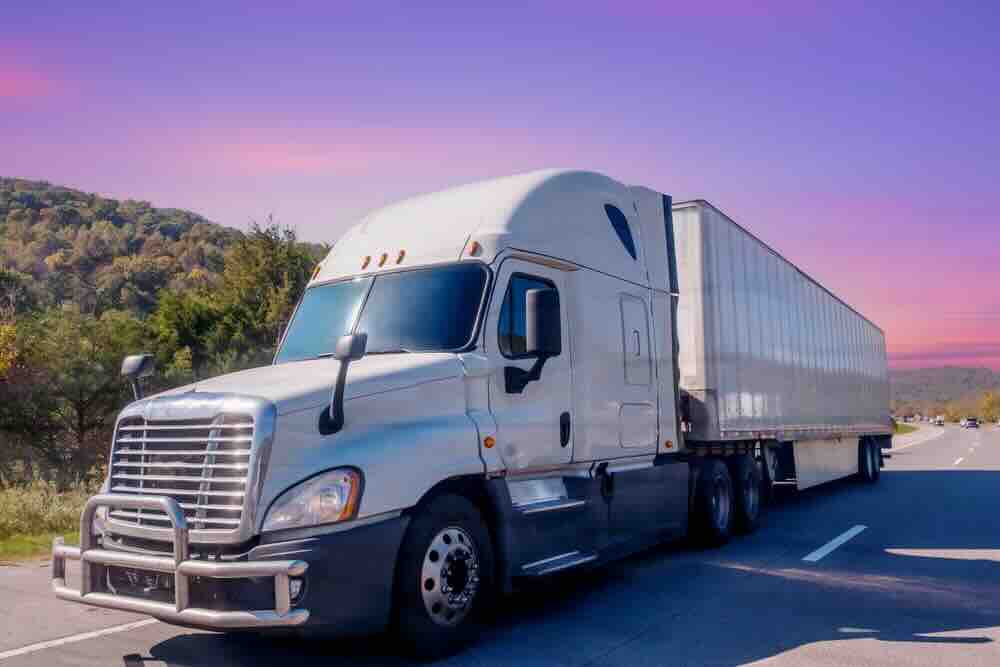
Truck overloading occurs when a commercial vehicle carries more cargo weight than is legally permitted or than the vehicle is mechanically designed to handle. Federal law caps the gross weight of most 18-wheelers on interstate highways at 80,000 pounds — that’s the combined weight of the tractor, trailer, and all cargo. Individual axle weight limits add another layer of restriction to ensure weight is distributed safely.
Overloading isn’t always obvious. A truck can be legal on total gross weight but still violate axle weight limits because the cargo is unevenly distributed. It can also carry cargo that appears manageable but shifts during transit, creating dangerous instability at highway speed. Both situations — technically overloaded trucks and improperly balanced loads — create deadly risks for everyone on the road.
Texas highways carry an enormous volume of commercial freight every day. From the petrochemical industry along the Gulf Coast to agricultural shipments across Central Texas, the economic pressure to maximize each load is constant and real. That pressure is also a leading cause of preventable truck accidents.
“The decision to overload a truck is rarely an accident — it is a calculated risk made by someone who profits from the cargo and bears none of the consequences when the brakes fail.”
– Truck Accident Attorney in Houston Greg Baumgartner
Understanding the legal weight limits for commercial trucks is essential to knowing when a violation has occurred—and who is legally responsible. The federal government sets baseline limits through the FMCSA; Texas has its own supplemental rules for state roads and bridges.
| Weight Category | Federal Limit | Why It Matters |
| Gross Vehicle Weight (GVW) | 80,000 lbs | Total weight of truck + trailer + all cargo |
| Single Axle | 20,000 lbs | Each individual axle maximum |
| Tandem Axle Group | 34,000 lbs | Two consecutive axles max combined |
| Bridge Formula Weight | Varies | Based on axle spacing to protect bridge structures |
| Texas State Roads | Varies by route | Some routes are lower; permits are required for oversize loads |
Trucks that exceed these limits must obtain special oversize/overweight (OS/OW) permits from TxDOT and are subject to specific route restrictions, time-of-day travel rules, and escort requirements. A truck found without proper permits after an accident — or found to have violated permit conditions — faces significant legal exposure.
The physics of an overloaded truck are unforgiving. Every system on a commercial vehicle — brakes, tires, steering, suspension — is engineered to handle loads within the legal maximum. Exceed those limits, and the margin for error shrinks to nearly zero.
| Brake Failure & Extended Stopping Distance Brakes generate friction-based stopping power calibrated for legal weights. Overloading significantly increases stopping distance. At 65 mph, a legal 80,000-lb truck already needs nearly 500 feet to stop — an overloaded truck may need 200+ feet more. | Rollover Accidents: Excess weight raises a truck’s center of gravity. Combined with improper weight distribution — cargo loaded too high or unevenly — this makes the vehicle dangerously prone to tipping on curves, ramps, and during lane changes. |
| Rollover Accidents Excess weight raises a truck’s center of gravity. Combined with improper weight distribution — cargo loaded too high or unevenly — this makes the vehicle dangerously prone to tipping on curves, ramps, and during lane changes. | Cargo Spills & Falling Debris Overloaded or improperly secured cargo can break free from restraints, especially on rough pavement or during sudden maneuvers. Cargo falling onto a highway at speed creates an often unsurvivable obstacle for following vehicles. |
| Suspension & Steering Failure Suspension systems absorb road impact and maintain stability. Operating beyond rated capacity accelerates wear and can cause catastrophic mid-journey failure. A steering failure on an overloaded truck at highway speed leaves the driver with no control. | Road & Bridge Damage Overloaded trucks cause disproportionate road damage and bridge stress. A single overloaded pass causes the equivalent wear of thousands of legal vehicle passes, creating secondary hazards for all road users. |
You generally cannot tell at a glance whether a truck is overloaded, but certain visible signs should prompt you to give the vehicle extra space and extra caution while sharing the road.
| VISIBLE SIGNS A TRUCK MAY BE OVERLOADED OR IMPROPERLY LOADED: Tires visibly bulging or appearing squashed flat under the trailer weight. Suspension components are pressed fully down or nearly bottomed out. Cargo visibly shifting or swaying during lane changes or turns. Trailer tilting noticeably to one side while the road is level. Truck struggling to maintain highway speed on flat terrain. Exhaust smoke indicates the engine is working far beyond normal demand. Unusual weaving or difficulty holding a lane, especially on curves. Cargo straps that appear loose, frayed, or fewer than required |
Federal trucking regulations are explicit about the responsibilities of both drivers and carriers regarding load weight and securement. These are not mere guidelines — they are legally enforceable standards, and violations directly establish grounds for negligence claims.
| FEDERAL REQUIREMENTS UNDER FMCSA REGULATIONS Drivers must inspect cargo before departure and within the first 50 miles, then every 3 hours or 150 miles during transit. Cargo must be secured to prevent shifting, falling, or leaking under normal driving conditions and foreseeable road hazards. The number and type of tie-downs required are determined by cargo weight and length — minimum standards are prescribed by regulation. Drivers must refuse a load that violates weight laws — acceptance of an overweight load can make the driver personally liable. Carriers must ensure loads comply with all applicable weight limits before dispatch. Weight manifests and trip records must be accurate — falsifying weight documents is a federal violation. Trucks must stop at weigh stations to verify compliance — bypassing a weigh station is itself a violation |
One of the most dangerous patterns in the trucking industry is carrier pressure on drivers to accept overloaded cargo or falsify weight documents to avoid the cost and delay of reloading. When a driver is effectively forced to violate weight laws — through threat of job loss, loss of preferred routes, or withheld pay — the carrier bears a heightened level of legal responsibility for any resulting accident.
Experienced truck accident attorneys know to look for internal communications, dispatch records, and driver statements that reveal this kind of systematic pressure. This evidence can support claims not just for negligence, but potentially for punitive damages when the conduct is especially egregious.
Unlike a standard car accident, an overloaded truck crash cases often involve multiple responsible parties. Texas law allows victims to pursue claims against all parties whose negligence contributed to the accident. Identifying all liable parties is critical — it increases the pool of insurance coverage and available assets for recovery.
| The Truck Driver Drivers have a personal duty to inspect loads and refuse illegal cargo. Accepting an overweight load or failing to conduct required cargo inspections creates direct personal liability, regardless of employer pressure. | The Trucking Company Carriers are responsible for dispatch policies, load assignments, and compliance culture. Systematic overloading or pressure on drivers to violate weight laws exposes the carrier to substantial liability — including punitive damages. |
| The Loading Company: Third-party loaders who exceed weight limits, improperly distribute cargo across axles, or fail to properly secure the load with adequate tie-downs may share liability for accidents caused by their loading decisions. | The Trailer or Vehicle Owner. If the trailer was owned by a party other than the carrier, and it had mechanical defects — overworked brakes, deteriorated suspension — that contributed to the crash, the owner faces separate liability. |
| The Manufacturer. In cases where a component failed at weights within legal limits — such as a defective brake system or substandard cargo restraint — product liability claims against the manufacturer may be available. | The Manufacturer. In cases where a component failed at weights within legal limits — such as a defective brake system or substandard cargo restraint — product liability claims against the manufacturer may be available. |
Evidence in overloaded truck cases — weight tickets, electronic logbooks, cargo manifests, weigh station bypass records — can be lost, overwritten, or deliberately destroyed within days of a crash. Acting quickly is often the difference between a provable case and one that falls apart.