 Request FREE consultation - 1866-758-4529
Quick answer: A fully loaded tractor-trailer traveling at 65 mph may need about 525 feet under favorable conditions. The Federal Motor Carrier Safety Administration warns that a large truck or bus may need up to two football fields to stop. Rain, speed, a downhill grade, delayed reaction time, worn brakes, and other conditions can increase the stopping distance.
An 18-wheeler can legally weigh as much as 80,000 pounds. At highway speed, that weight creates tremendous force. A truck cannot respond like a passenger car, and its driver must plan for the room the vehicle needs.
That point matters on Texas highways, where traffic can change in seconds. Congestion on I-35, construction on I-10, or a sudden backup on I-45 is not unusual. A professional driver should expect traffic to slow and leave enough space to stop safely.
The truck’s long stopping distance explains why extra care is necessary. It does not excuse a driver who was speeding, distracted, tired, or following too closely.
People often use “stopping distance” and “braking distance” as if they mean the same thing. They do not. Total stopping distance has three basic parts:
At 65 mph, a vehicle travels about 95 feet each second. A driver who looks away, reacts late, or is slowed by fatigue can use up a large portion of the available roadway before meaningful braking begins.
A useful general estimate is about 525 feet for a fully loaded tractor-trailer traveling at 65 mph in favorable conditions. Some sources use approximately 600 feet because their assumptions about reaction time, vehicle condition, or roadway conditions differ.
A passenger vehicle at the same speed may stop in roughly 300 to 316 feet under favorable conditions. These figures are educational estimates, not a reconstruction of a particular crash.
| Vehicle at 65 mph | Approximate total distance | Important qualification |
| Passenger vehicle | About 300–316 feet | Favorable conditions; estimates vary. |
| Fully loaded tractor-trailer | About 525 feet | Favorable conditions; FMCSA describes up to two football fields. |
| Truck in less favorable conditions | May exceed the general estimate | Rain, grades, speed, reaction delay, load, tires, and brakes matter. |
Source note: FMCSA public road-safety guidance. Actual stopping distance requires case-specific measurements and analysis.
Braking distance rises much faster than speed. As a general physics principle, doubling speed can produce roughly four times the braking distance when other conditions stay the same. Perception and reaction distance also increase because the truck travels farther during every second of delay.
That is why a small increase in speed can be important. A truck driver who enters slowing traffic at 70 or 75 mph may have far less room for error than a driver traveling at a safe speed for the conditions.
Speed increases both the distance traveled before the driver reacts and the distance required for the brakes to stop the truck.
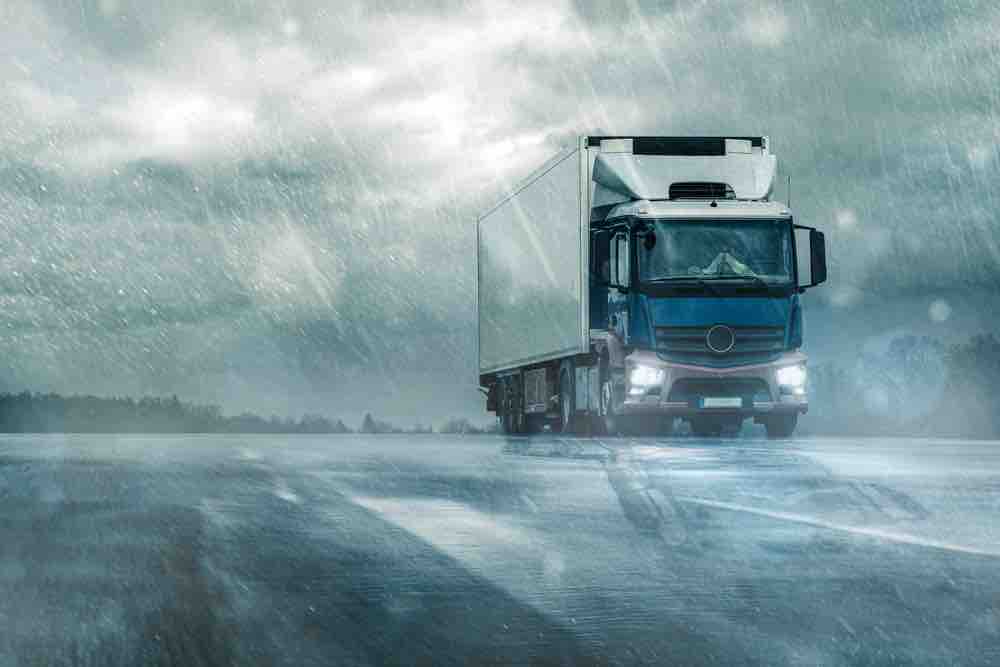
Wet or slippery pavement reduces traction. Poor visibility may also delay perception. Federal law requires a commercial driver to use extreme caution and reduce speed when hazardous conditions affect visibility or traction. If conditions become dangerous enough, 49 C.F.R. § 392.14 requires the driver to stop operating until the truck can be driven safely. Read more about Texas truck accidents caused by bad weather.
Most tractor-trailers use air brakes. After the driver presses the pedal, the system needs a brief moment to apply braking force throughout the tractor and trailer. Even a short lag adds distance at highway speed.
Worn, overheated, leaking, or poorly adjusted brakes can reduce stopping power. A brake problem does not have to cause a total failure to matter. Weak braking at one wheel or axle can increase distance, pull the truck sideways, or contribute to a jackknife. Federal inspection, repair, and maintenance rules require carriers to keep commercial vehicles in safe operating condition. Our guides explain truck brake failure claims and truck maintenance claims.
A downhill grade adds to the truck’s momentum and can heat the brakes. A careful driver should select a safe speed and gear before descending—not after the truck has begun to gain speed.
Weight and load distribution affect traction, balance, heat, and braking performance. The answer is not as simple as saying that every loaded truck stops more slowly than every empty truck. The truck, trailer, brakes, tires, load, and road must be evaluated together. Poorly secured or unbalanced cargo can also make the truck unstable. See our discussion of improperly loaded truck accidents.
A distracted or tired driver may recognize danger too late. The brakes may work correctly, yet the truck still crashes because the driver waited too long to use them.
Texas does not set one safe number of feet for every situation. Texas Transportation Code § 545.062 requires a driver following another vehicle to maintain an assured clear distance, taking into account speed, traffic, and highway conditions.
For an 18-wheeler, a safe gap changes with speed, weather, visibility, traffic, grade, load, and equipment condition. A professional driver should leave enough space to respond to a foreseeable slowdown without striking the traffic ahead. Learn more about following-distance requirements for truck drivers.
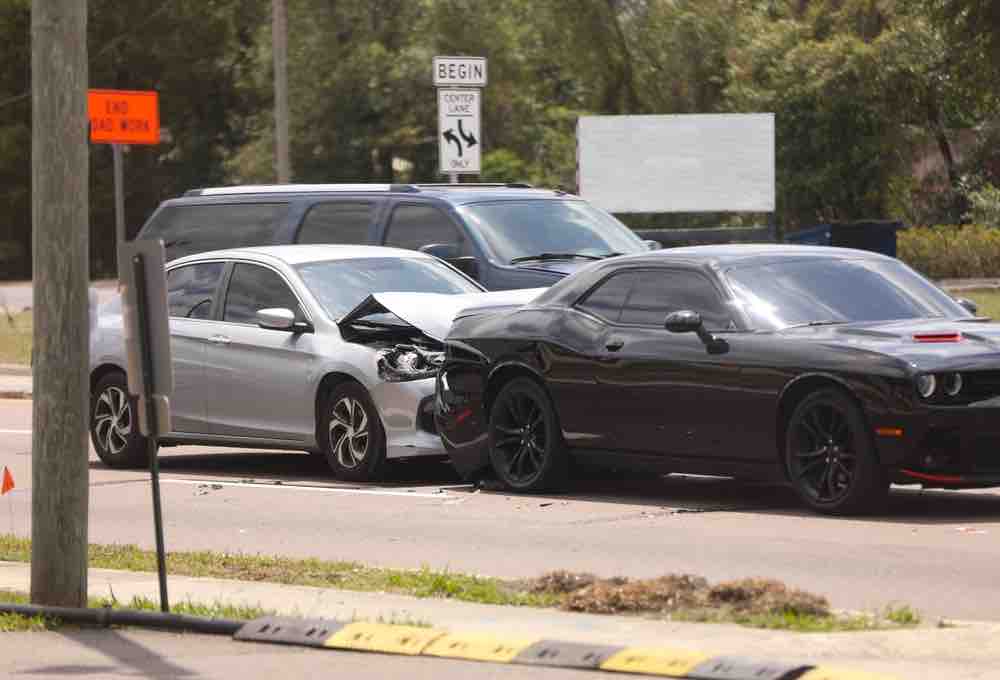
After a rear-end collision, a trucking insurer may say that traffic stopped suddenly and the truck simply could not stop. That explanation raises the central question: Why was the truck traveling at that speed without enough room to stop?
Truck drivers know their vehicles require more distance. They are expected to control speed, watch traffic, and leave a safe cushion. A claim may involve the driver, the motor carrier, a maintenance company, a loading company, or more than one responsible party.
If you were rear-ended by an 18-wheeler, the investigation should test the company’s explanation against the physical and electronic evidence.
In a serious case, I do not want to rely only on a driver’s memory or a company’s accident report. I want to know when the danger became visible, when the driver reacted, when the brakes were applied, and whether the truck had enough room to stop.
Useful evidence may include:
Some electronic information can be overwritten, and repairs can change the physical evidence. A focused preservation demand should be sent quickly. Our guides explain what a truck’s black box may record and what evidence should be preserved after a Texas truck crash.
“In a rear-end truck case, the stopping-distance chart is only the beginning. I want to know when the driver first had a reason to react, when the brakes were applied, how fast the truck was moving, and whether the driver left enough room for ordinary Texas traffic. The truck company’s data and records often answer those questions better than its first explanation.”
I founded my practice in 1985 and have handled serious commercial-vehicle cases for more than 40 years. I keep a low-volume practice because these cases require early investigation and close attention. Our firm has never lost a commercial-vehicle accident case. Past results do not guarantee a similar outcome.
A fully loaded tractor-trailer may need about 525 feet in favorable conditions, and the FMCSA describes the distance as up to two football fields. Actual distance depends on the truck, driver, load, brakes, road, grade, and weather.
There is no single time for every truck. At 65 mph, a commonly cited estimate is several seconds and about 525 feet under favorable conditions, but a delayed reaction or poor conditions can increase both time and distance.
Their weight, speed, air-brake lag, tire and brake condition, road grade, load, and the driver’s perception and reaction all affect the stop. The difference becomes especially important at highway speed.
Yes. Rain can reduce traction and visibility, which can increase braking distance and delay the driver’s response. Federal rules require commercial drivers to slow down and use extreme caution in hazardous conditions.
The facts control, but sudden traffic does not automatically excuse the driver. A professional driver should choose a speed and following distance that allow for foreseeable slowdowns, congestion, and road hazards.
Electronic truck data, video, physical marks, vehicle damage, witness accounts, driver logs, maintenance records, and reconstruction measurements may show speed, timing, distance, and braking.
If an 18-wheeler struck you from behind or could not stop in time, the reason may be found in evidence controlled by the trucking company. I move quickly to identify the truck, preserve available data, and test whether speed, following distance, fatigue, maintenance, cargo, or company decisions contributed to the crash.
Call (281) 893-0760 for a free consultation. There is no attorney’s fee unless we win. You can also learn more about working with an experienced Texas truck accident lawyer.