Home » Legal Information » Interstate vs. Intrastate Motor Carriers: What Texas Accident Victims Need to Know
Interstate vs. Intrastate Motor Carriers: What Texas Accident Victims Need to Know
If you were hit by a commercial truck in Texas, one of the very first questions your attorney will ask is deceptively simple: Was that truck operating interstate or intrastate? The answer is not just paperwork. It decides which safety rules the driver had to follow, how much insurance is sitting behind your claim, and how your injury or wrongful death claim is built.
Here is the short version: interstate trucking moves cargo across state lines (or to a destination in another state or country). Intrastate trucking stays entirely inside Texas from pickup to drop-off. Below, we explain the difference in plain English, why it matters to your case, and how to find out which one applies to the truck that hit you.
Injured by a commercial truck? You do not have to figure the classification out alone. Speak with an experienced truck accident lawyer in Texas for a free, no-obligation case review: (281) 893-0760.
On This Page
Interstate vs. Intrastate at a Glance
Use this quick comparison to orient yourself, then read on for the details that matter most to an accident claim.
Factor
Interstate carrier
Intrastate (Texas-only) carrier
What it means
Cargo crosses state lines (or is bound for / coming from another state or country)
Cargo starts and ends inside Texas the entire trip
Who regulates it
FMCSA — federal rules (FMCSR)
TxDMV / Texas DPS — state rules (TMCSR)
ID number on the door
USDOT Number
TxDMV (Texas DOT) certificate number
Max driving time
11 hours after 10 hours off duty; 14-hour on-duty window
12 hours after 8 hours off duty; 15-hour on-duty window
Minimum liability insurance
$750,000 general freight; up to $5 million for hazmat
$500,000 typical; up to $5 million for hazmat / large buses
MCS-90 endorsement
Required — insurer must pay valid claims even if the policy would exclude them
Not required
Who Regulates Interstate vs. Intrastate Truckers?
Interstate carriers answer to the federal Motor Carrier Safety Regulations (FMCSR), enforced by the FMCSA. These cover driver qualifications, hours of service, vehicle inspections, drug and alcohol testing, and nationwide safety standards.
Intrastate carriersare subject to the Texas Motor Carrier Safety Regulations (TMCSR), administered by the Texas Department of Motor Vehicles and the Texas Department of Public Safety. Texas adopts much of the federal framework but changes important details — especially how long a driver may stay on the road and how much insurance the company must carry.
Fatigue is one of the leading causes of truck crashes, so the hours-of-service limits a driver has to follow can be central to your case. Interstate and Texas intrastate rules are similar but not identical:
Rule
Interstate (FMCSA)
Intrastate (Texas)
Max driving time
11 hours
12 hours
Required time off first
10 consecutive hours
8 consecutive hours
Max on-duty window
14 hours
15 hours
Mandatory break
30 minutes within first 8 hours
Not separately required
The federal limits come straight from the FMCSA hours-of-service regulations. Because Texas gives intrastate drivers a longer driving and on-duty window, identifying the correct rule set helps your lawyer determine whether the driver was legally on the road when the crash happened — and whether the company pushed them past safe limits.
Insurance Requirements: Federal vs. Texas
For an injured person, this is often the single most important difference. The amount of insurance behind a truck frequently sets the ceiling on what you can actually recover for medical bills, lost wages, and pain and suffering.
Interstate minimums (FMCSA)
$750,000 for general freight carriers
$1 million to $5 million for carriers hauling hazardous materials, depending on the substance
An MCS-90 endorsement, which forces the insurer to pay a valid judgment up to the policy limits — even when the policy would otherwise exclude the loss
Texas intrastate minimums (TMCSR)
$500,000 for many farm vehicles and smaller commercial trucks
$1 million to $5 million for hazardous materials and larger passenger vehicles
Because interstate carriers must meet higher federal minimums and carry the MCS-90 endorsement, interstate cases often have more coverage available than intrastate cases. That single fact can shape your entire claim. For a closer look at how trucking policies work, read our guide to truck liability coverage. You can also review the federal insurance filing requirements directly from the FMCSA.
What Types of Trucks Are Usually Interstate vs. Intrastate?
You usually cannot tell a truck’s legal status just by looking at it — any vehicle can be used for interstate work. Still, certain trucks are far more common in one category than the other.
Commonly, intrastate (local) vehicles
These vehicles tend to serve local businesses and governments and stay within Texas: dump trucks, garbage trucks, concrete (ready-mix) trucks, bucket trucks, tow trucks and wreckers, and local delivery box trucks.
Commonly, interstate (long-haul) vehicles
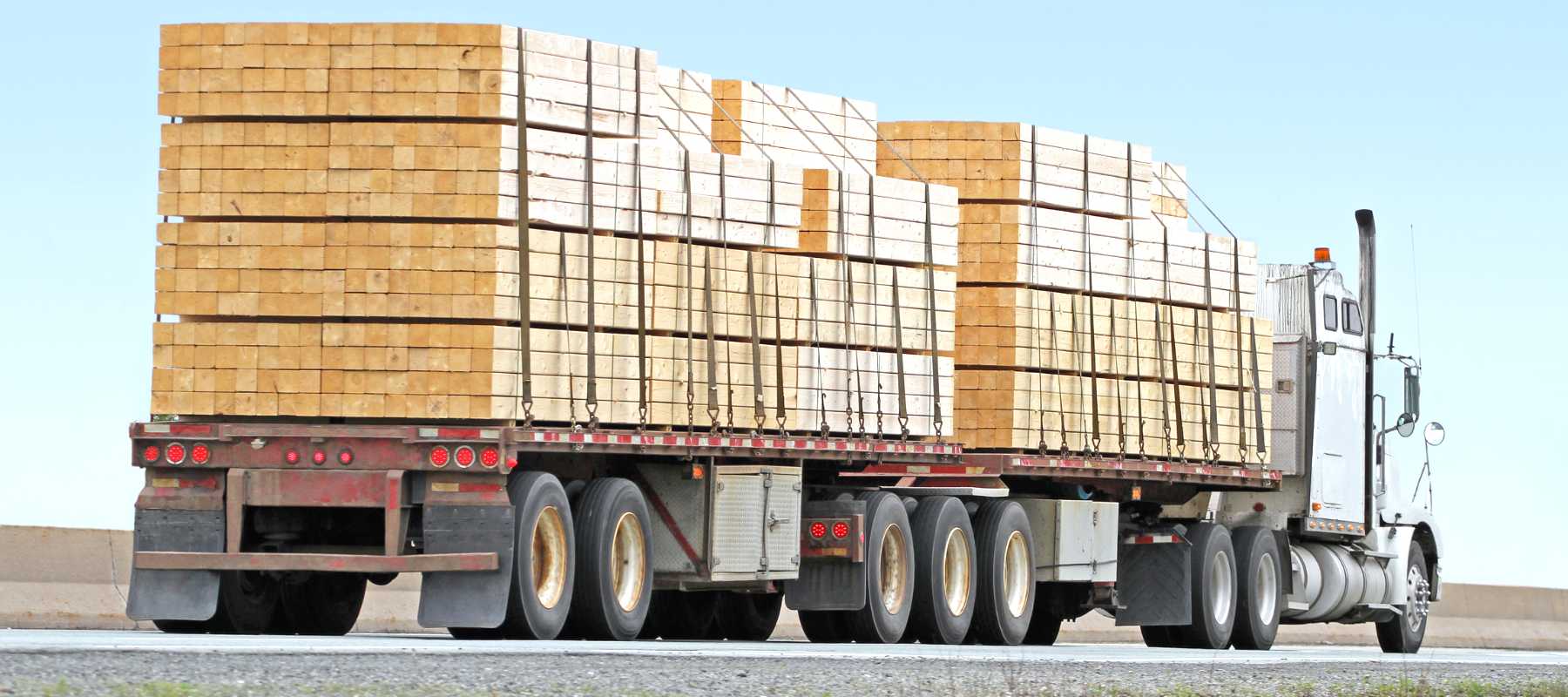
These are the large rigs built to move freight across state lines: 18-wheelers, semi-trailers and tractor-trailers, tanker trucks, flatbeds, and the FedEx and UPS line-haul trucks that connect distribution hubs. Larger interstate trucks generally fall under stricter rules and carry more insurance, which is exactly why pinning down the classification matters.
How Do You Know If the Truck Was Interstate or Intrastate?
After a crash, you are not expected to know this on your own, but a few clues point the way:
Check the doors. Both federal and state law require the carrier’s DOT number to be painted on both sides of the cab in letters at least two inches tall. A USDOT Number signals an interstate carrier; a TxDMV (Texas DOT) certificate number signals a Texas-only intrastate carrier.
Pull the police report. It usually lists registration numbers that can be run against state and federal databases to reveal who owns the truck and what kind of commerce it engages in.
Look at the paperwork. Shipping documents, bills of lading, and insurance filings all help establish whether the load was crossing state lines.
A note that confuses many people: the type of highway the truck was on does not determine its status. A truck on Interstate 10 may be a purely intrastate carrier, and a truck on a small state road may be hauling an interstate load. The classification follows the cargo, not the road sign.
Mixed Fleets and the Confusion They Create
Larger trucking companies often run mixed fleets — some equipment authorized for interstate work, some only for intrastate. It is up to the carrier’s dispatchers and asset managers to properly assign the right load to authorized equipment. When they get it wrong (for example, sending an intrastate-only vehicle across a state line), the resulting coverage and compliance gaps can become a major issue in an accident claim. These mistakes are a recurring theme in cases against negligent trucking companies.
Why the Classification Matters for Your Case
Whether the truck was interstate or intrastate directly affects four things that drive the value and strategy of your claim:
Which safety rules applied — federal FMCSR or Texas TMCSR
How long the driver could legally be behind the wheel — the hours-of-service window
How much insurance is available — often the practical limit on your recovery
How your lawyer holds the company accountable — the records, violations, and parties in play
Once we know the truck’s status, the path of your claim becomes clearer. In an interstate case, federal rules require detailed records — driver logs, inspection reports, drug-and-alcohol testing, and maintenance files — which can become powerful evidence. Federal minimums and the MCS-90 endorsement also tend to mean more coverage is available to pay your damages.
In an intrastate case, Texas-specific service rules, insurance minimums, and safety standards apply instead, and the available coverage may be lower. Either way, the differences in operating authority, insurance, and oversight are exactly why having a lawyer who knows both systems matters. When a company’s conduct is especially reckless, classification can also support a claim for punitive damages.
We handle these cases across the state, including high-risk corridors such as Interstate 10 and Interstate 45.
Frequently Asked Questions
Can a truck be “interstate” even if it never leaves Texas?
Yes. If the cargo is part of a shipment that started in or is bound for another state or country, the trip counts as interstate commerce — even if the truck stays inside Texas the whole time. Classification follows the goods, not the truck’s route.
Why does interstate vs. intrastate affect how much money I can recover?
Interstate carriers must carry higher federal minimum insurance and an MCS-90 endorsement that forces the insurer to pay valid claims. That usually means more coverage is available to pay your medical bills and other losses than in a typical intrastate case.
How can I tell which rules applied to the driver who hit me?
Start with the DOT number on the truck’s doors and the police report. A USDOT number points to an interstate carrier under FMCSA rules; a TxDMV certificate number points to a Texas intrastate carrier. An attorney can confirm the status by checking the carrier’s federal and state filings.
Does it matter that the crash happened on an interstate highway?
No. The highway type does not determine a carrier’s legal classification. A truck on I-10 can be intrastate, and a truck on a state road can be carrying an interstate load. What matters is where the cargo begins and ends.
Do I need a lawyer to sort all of this out?
It helps. Trucking companies and their insurers move quickly to protect themselves, and the rules are technical. An experienced Texas truck accident attorney can investigate the DOT registration, insurance filings, and safety compliance, then build the strongest possible case for you. Browse more answers on our truck accident FAQ page.
Talk to an Experienced Texas Truck Accident Lawyer
After a serious truck wreck, you are facing medical bills, missed work, and a lot of uncertainty. Figuring out whether the truck was interstate or intrastate is one of the first steps to protecting your rights — and you should not have to do it on your own.
At Texas Truck Accident Lawyer, we have decades of experience handling complex trucking cases across the state. We know how to investigate DOT registrations, insurance policies, and federal and state safety compliance to build the strongest case for our clients. If you or a loved one was injured in a truck crash, contact us today for a free consultation.
Free Case Review — No Fee Unless We Win
Call (281) 893-0760 • Toll Free 1-866-758-4529
Areas in Texas Where Many Big Rig Crashes Occur
Our truck accident attorneys handle cases across Texas. Some highways are high risk– we have exceptional expertise in truck wrecks- some dangerous areas include: