 Request FREE consultation - 1866-758-4529
After a serious injury truck accident, knowing what evidence to preserve, especially after a truck accident in Texas, can be a positive step toward receiving fair compensation for your case.
Unlike regular car-to-car accidents, 18-wheeler and other commercial vehicle crashes can involve federal and state safety regulations that should be preserved for help with your case. Also, you can have multiple parties and vital electronic evidence that needs to be gathered in many cases.
The Texas truck accident lawyer explains the type of evidence and when to act to protect your rights for a personal injury claim.
This guide is designed for truck accident victims, their families, and anyone involved in commercial vehicle crashes during the hours after the wreck. Whether you’re dealing with serious injuries from an 18-wheeler collision or managing the aftermath of a loved one’s fatal accident, knowing what actions to take is vital.
Evidence preservation is crucial because the burden to prove your case falls upon the injured victim. That requires proof. Some efforts to preserve evidence are more important than others. Evidence, such as surveillance videos, must be obtained before they are overwritten or lost, and then secured quickly. Factual evidence from the collision scene will deteriorate quickly and should be documented promptly.
Not all cases require immediate action to save evidence. When liability is clear, its importance can diminish in some instances. For instance, if you were rear-ended while stopped at a red light, obtaining local surveillance video may not be needed. Also, one must balance the severity of your injuries with the cost of obtaining some information.
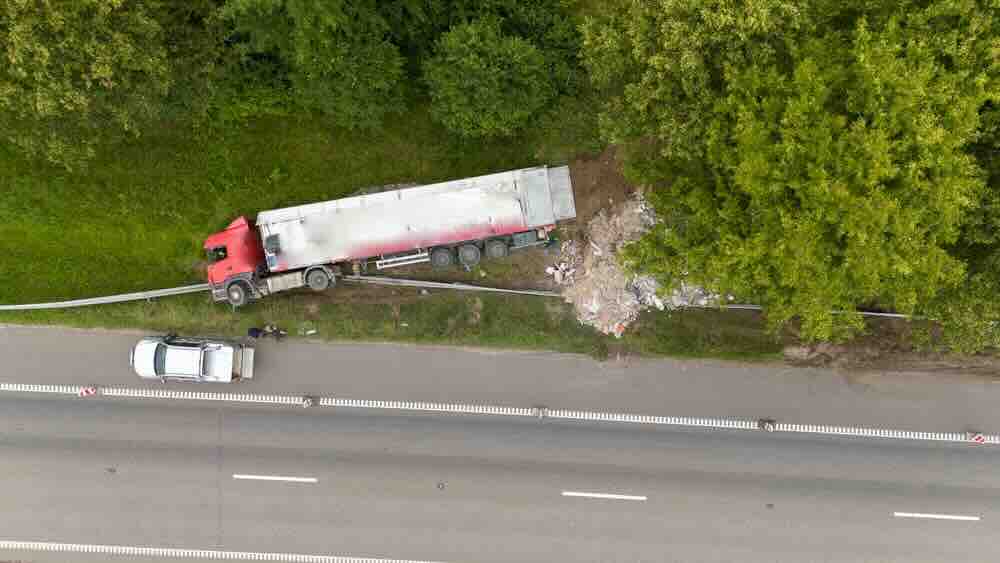
Evidence preservation is the legal and practical process of securing proof before it’s lost, altered, or destroyed by trucking companies, insurance adjusters, or the passage of time.
Commercial vehicle accident cases generally involve more relevant evidence than a typical car accident crash. The applicability of federal trucking regulations and the potential for multiple parties, including drivers, motor carriers, maintenance contractors, and cargo shippers. The more serious the injuries in the accident and the number of parties involved increases, the risk of losing evidence increases if it is not quickly secured.
Surveillance footage from nearby businesses is usually automatically overwritten within 7-30 days (or less) of recording. A business security video can often show exactly what happened in the accident and cut off typical defenses. Too, the scene should be documented before skid marks and other scene evidence deteriorate and are lost.
In some cases, documenting the scene can be vital to improving your odds for success in a truck accident lawsuit. Places like skid marks, debris, and gouges in the highway. All can be very useful to an accident reconstruction expert in accurately reenacting the crash. Accident reconstruction experts are frequently hired when the liability is disputed or when the trucking defendants blame the victim.
Rain and heavy travel can cause much of a scene to disappear; therefore, documenting the important factual evidence as soon as possible is recommended.
Evidence that is no longer available is, in many cases, simply a missed opportunity to help prove wrongful conduct. Or violations of regulations. As mentioned earlier, in some cases where liability is not disputed, the lost evidence may not matter much. If the crash is captured on video, either dash cam or otherwise, what happened may not be in dispute.
However, the stronger your case, the better your claim and power in settlement negotiations. If you have evidence of a knowing violation of the regulations or possible punitive damage claims, your case is strengthened substantially through good evidence.
Winning a truck accident lawsuit requires the plaintiff to prove their case. Here are critical types of evidence that you must preserve to have the strongest possible case. This evidence can include showing the severity of the crash and the driver’s conduct.
Hours-of-service logbooks show the driver’s time behind the wheel and on the job. Drivers’ logs often reveal rule violations that can lead to driver fatigue and to the trucking company’s negligence in monitoring its drivers.
Post-accident drug and alcohol test results are required within 2-8 hours under Federal Motor Carrier Safety Regulations (FMCSA §382.303) for qualifying truck crashes. Alcohol and drug testing results provide critical proof of impairment that can support punitive damages claims worth hundreds of thousands of dollars.
Driver employment files include training records, prior violations, medical certifications, and CDL license status. Negligent hiring practices or inadequate training by trucking companies can help establish additional liability beyond the individual driver’s actions.
Vehicle maintenance records required under FMCSA §396.3 document whether the truck received proper inspections and repairs. Failure to address mechanical problems that contributed to a crash can constitute the trucking company’s negligence in vehicle safety.
Crash scene photographs or video, including vehicle positions, skid marks, debris patterns, and road conditions, preserve essential details about impact angles, speeds, and environmental factors that contributed to the accident. Physical evidence, such as tire marks, can disappear quickly due to weather and cleanup efforts.
Surveillance footage from nearby businesses, traffic cameras, and other vehicles provides independent verification of crash circumstances. This footage typically gets overwritten within 7 days, making immediate requests to business owners and government agencies essential.
Eyewitness contact information must be collected immediately. Often, accident victims rely upon the investigating officers to document eyewitness accounts. Unfortunately, this does not always happen. Witnesses to the crash can help prove your case and are powerful evidence in a truck accident lawsuit.
Vehicle damage documentation, including detailed photographs and an expert inspection, provides evidence of impact forces, crash severity, and mechanical failures that may have contributed to the accident.
Collecting vital evidence after a truck accident often requires the victim or their family to take action. And for more help from a truck accident attorney to secure the most valuable evidence. We recommend that victims or their families interview local attorneys to find the best truck accident attorney. To find the best truck accident law firm for their case.
When to use this: For victims who are conscious and able to act safely at the accident scene or shortly after receiving medical treatment.
| Evidence Type | Self-Collection | Legal Preservation |
| Scene photos | Can document immediately | Not applicable |
| Witness statements | Basic contact info only | Professional interviews and written statements |
| Black box data | No access possible | Required through discovery and preservation letters |
| Driver logs | Not accessible | Obtained through legal discovery and subpoenas |
| Maintenance records | The company won’t share | Disclosure through discovery in a lawsuit |
While victims should collect basic scene evidence immediately if it is safe to do so, the most critical evidence, such as electronic data and corporate records, requires an experienced truck accident lawyer to obtain.
Trucking companies and their insurers often send lawyers, investigators, and experts within hours of serious crashes to document facts they believe may help defend a personal injury or wrongful death claim.
Solution: An experienced truck accident lawyer will send spoliation letters demanding preservation of all electronic data, truck driver logs, maintenance records, and internal communications related to the crash. Admissible and relevant evidence will be obtainable through discovery once a lawsuit has been filed.
Solution: Send a preservation-of-evidence letter to the truck driver and the trucking company. Identify and act to obtain surveillance camera footage from nearby businesses or homes.
Solution: Hire professional investigators to locate and interview witnesses of the crash, obtaining detailed statements.
Evidence preservation must begin as soon as possible after a truck accident to protect your rights and get fair compensation. Attorneys for trucking companies actively work to limit the availability of evidence. The most valuable evidence, including black box records, driver logs, and trucking company records, will require a skilled trucking accident attorney.
Related Topics: Understanding truck accident litigation timelines can help you prepare for the legal process ahead, while learning about federal trucking regulations provides context for potential violations that strengthen your truck accident claim.
Our truck accident law firm in Houston has been representing families after a wrongful death and individuals who have been seriously injured in commercial vehicle accidents for more than four decades. We have won hundreds of millions of dollars and have the expertise needed for your truck accident claim.
Call (281) 893-0760