By Texas truck accident lawyer Greg Baumgartner. Last reviewed November 2026.
I’m Greg Baumgartner. I’ve been representing people hit by big trucks in Texas since 1985, and Interstate 10 cases have been part of that work the whole time.
If you’re reading this, you or someone in your family was probably in a wreck with an 18-wheeler on I-10. You may be hurting, missing work, and already getting calls from an insurance adjuster who sounds friendly. I wrote this page to tell you what I’d tell you across my desk: where these crashes happen, why they happen, what to do this week, and how I handle a case.
If you’d rather just talk, call me at (281) 893-0760 or send me a note here. The call is free.
Where I-10 truck crashes happen in Texas
I-10 runs nearly 880 miles across Texas, from the New Mexico line at El Paso to the Louisiana line at Orange. It is not one road so much as five or six different ones, and the crashes look different on each.
The Katy Freeway and central Houston
West of downtown, I-10 carries commuters and long-haul freight side by side. The trouble spots are where traffic merges and stops without warning: the I-610 interchange, Beltway 8, and the approaches to downtown. A loaded tractor-trailer that is following too closely has no room when traffic stacks up. We wrote about one of these, a semi that wrecked on I-10 at Gregg Street during rush hour, and it was the kind of crash that did not have to happen.
Brookshire, Sealy and Columbus
Once you clear Katy, the road opens up and speeds climb. Then something stops traffic, a blowout or a work zone, and a truck driver who isn’t paying attention plows into the back of the line. That is what happened in the fatal eight-vehicle pileup on I-10 in Sealy. Rural crashes like that one tend to be the worst I see.
The East Freeway, Baytown and Chambers County
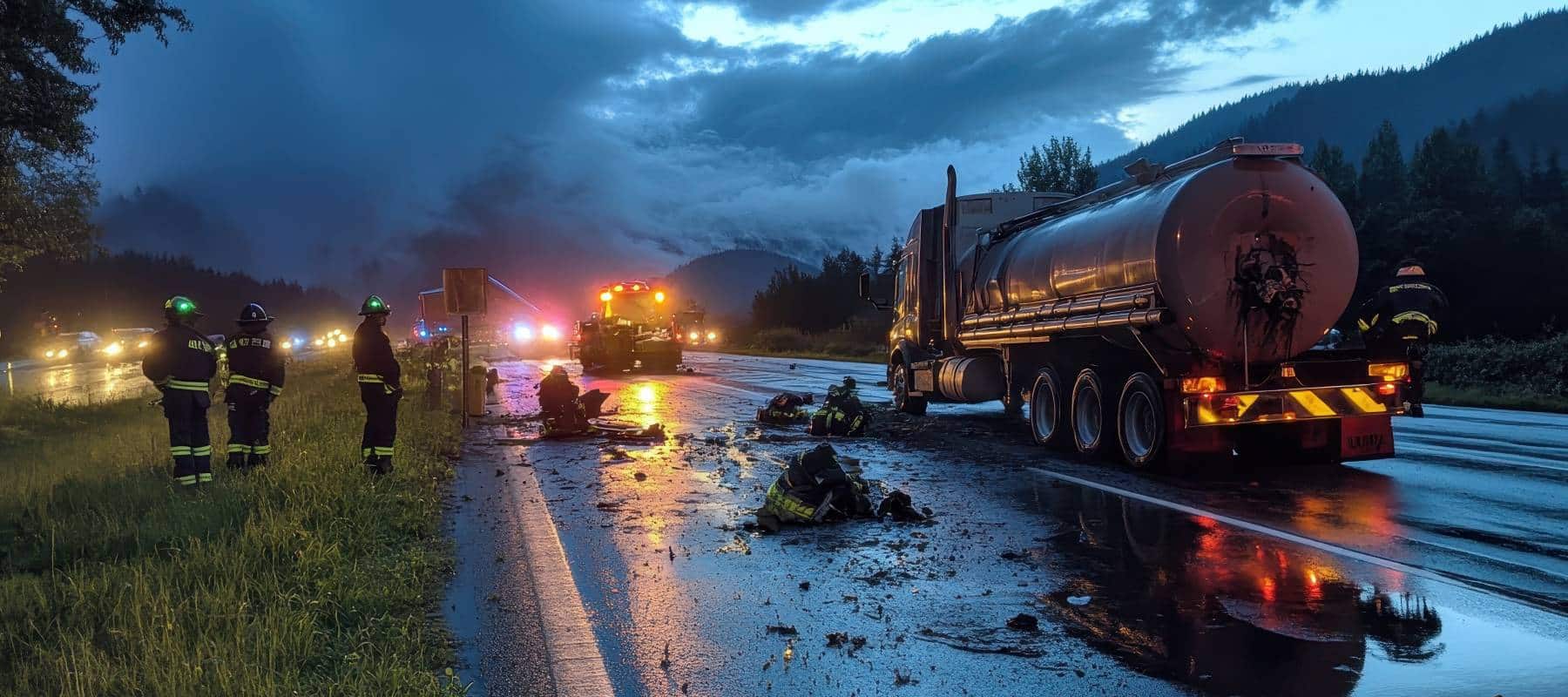
East of downtown, the traffic changes. You get tankers and chemical haulers running to and from the plants and the port. A rollover out here can shut the interstate for hours. If your crash was on this side of town, my Baytown truck accident page has more.
Beaumont to the Louisiana line
Jefferson and Orange counties see steady through-traffic headed to and from Louisiana, plus refinery trucks. I take cases here. See my page for Beaumont truck accidents.
TxDOT publishes commercial vehicle crash counts for every county. These are the 2025 figures for the counties I-10 crosses on the Houston and San Antonio ends. They cover every road in the county, not just I-10, and show where truck traffic and danger are concentrated.
After four decades of these cases, I rarely see a truck crash that was a true accident. Someone made a choice. These are the ones I see most.
Speed. A loaded 18-wheeler can weigh 80,000 pounds. At highway speed, it needs far more road to stop than your car does. Speeding trucks turn a traffic slowdown into a pileup.
Tired drivers. Federal rules let a truck driver drive no more than 11 hours after 10 straight hours off, inside a 14-hour workday, with a 30-minute break after 8 hours behind the wheel. You can read the FMCSA hours-of-service summary yourself. Drivers and dispatchers push past those limits to make a delivery window, and I-10 is long enough to tempt them.
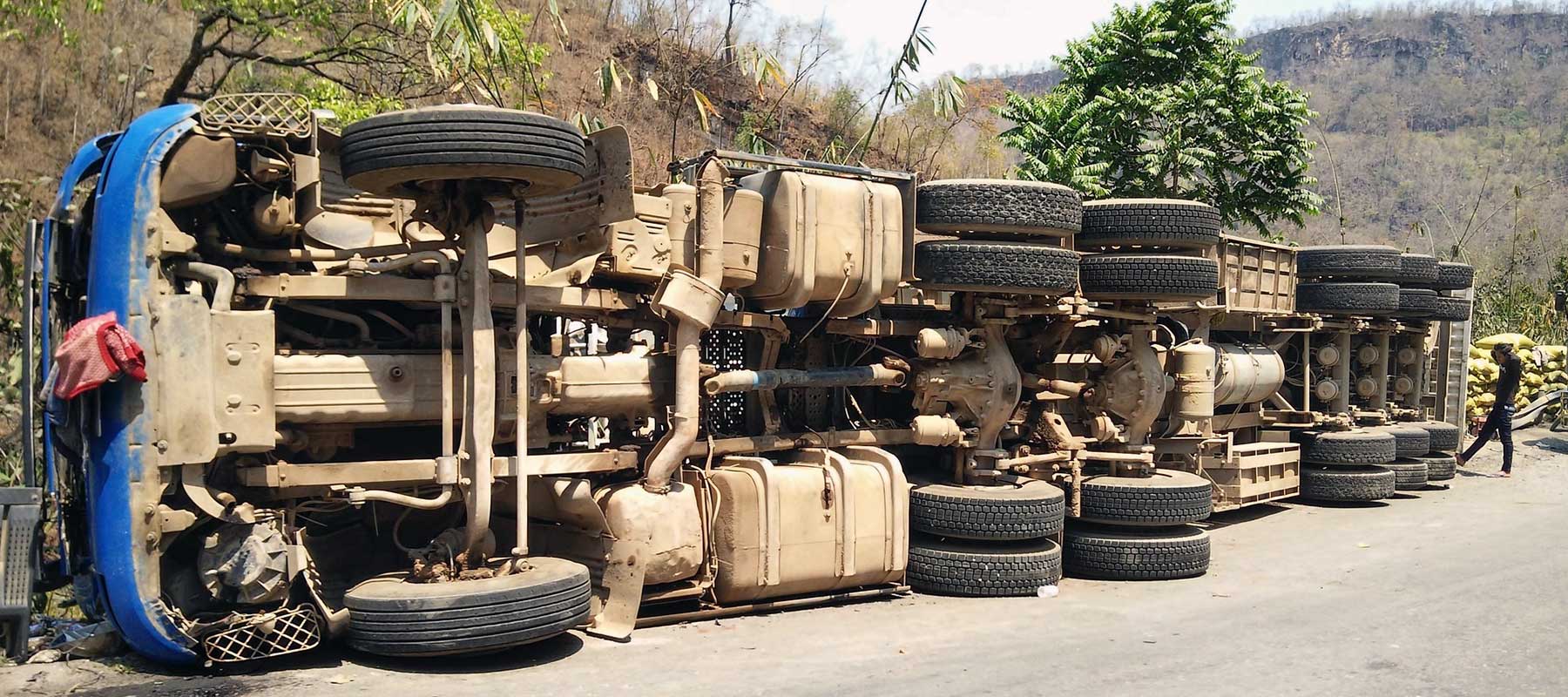
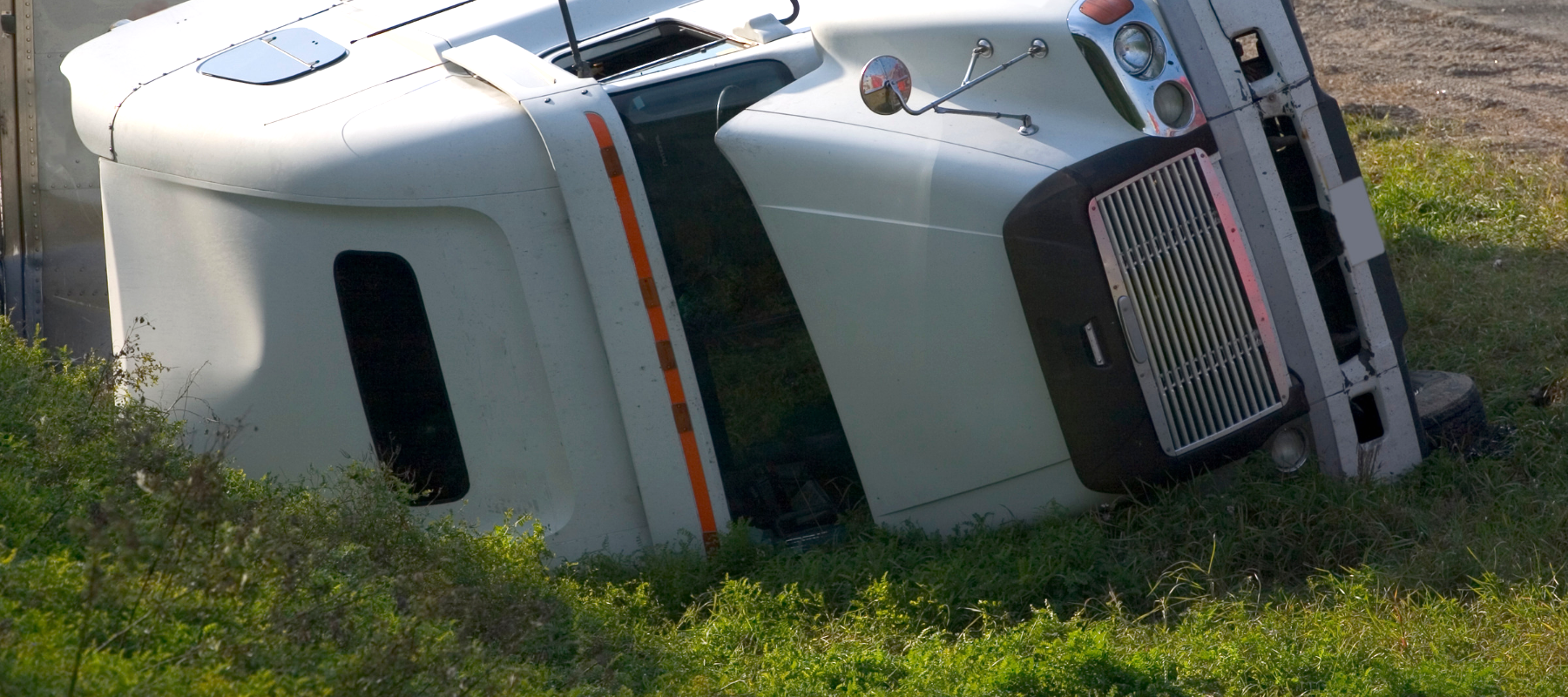
Jackknifes and rollovers. Hard braking, a bad load, or a wet road, and the trailer swings out across every lane. I cover these on my jackknife truck accident page.
Sheer volume. I-10 is one of the country’s main freight routes. More trucks means more chances for a careless one to find you.
Get medical care and keep going back. Some injuries don’t show up at the scene. Insurance companies use gaps in treatment against you.
Get the crash report number. Write down which agency worked the wreck: DPS, the sheriff, or the city police.
Save what you have. Photos, dashcam video, the names and numbers of witnesses, the name on the truck door and the DOT number if you got it.
Don’t give a recorded statement. The trucking company’s adjuster is not calling to help you. You can politely say you’ll have your lawyer call back.
Call a lawyer early. Not because I want the case, but because evidence in truck cases disappears, and I’ll explain why next.
How I handle an I-10 truck case
The trucking company and its insurer usually have people working on their defense within hours of a serious crash. So the first thing I do is go after the evidence before it’s gone.
That means a written demand that the company preserves the truck, its electronic data, the driver’s logs, dispatch records, and the driver’s file. Timing matters. Federal rules only require a carrier to keep a driver’s hours-of-service records and supporting documents for six months. On serious cases our quick response team gets to the scene and the vehicles while the marks are still on the road.
Then I work out who is responsible. It is usually more than the driver:
the driver
the trucking company that hired, trained, and scheduled him
a maintenance shop that let bad brakes or tires back on the road
the company that loaded the trailer
the maker of a part that failed
From there, I deal with the insurance companies so you don’t have to, bring in the experts the case needs, and put a number on everything you have lost: medical bills now and later, lost income, and what the injury has done to your daily life. If the offer isn’t fair, we go to court.
If you lost a family member, I am sorry. Those cases work differently, and I’ve written about them separately on my fatal truck accident page.
“They’re saying it was partly my fault”
Expect that. Blaming you is the cheapest defense a trucking company has. In Texas, how the blame is divided matters. Under Chapter 33 of the Civil Practice and Remedies Code, you cannot recover damages if you are found more than 50 percent responsible, and below that line your recovery is reduced by your share. That’s another reason the truck’s data and the driver’s records matter so much. They often prove who really caused the crash.
Questions people ask me
How long do I have to file?
In most cases, two years from the date of the crash. In a death case, two years from the date of death. That comes from Section 16.003 of the Texas Civil Practice and Remedies Code. There are exceptions, so don’t rely on a web page for your deadline. Ask me about your situation.
What does it cost to hire you?
Nothing up front. I work on a contingency fee, which means I’m paid a percentage of what I recover for you. If I don’t win, you don’t owe me a fee. The first conversation is free either way.
What is my case worth?
I can’t tell you honestly until I know your injuries, your medical bills, how long you’ll be out of work, and how the crash happened. Anyone who quotes you a number on the first phone call is guessing. Early on, I can tell you what I’d need to see and what will drive the value up or down.
The truck was from out of state. Does that matter?
Much of the truck traffic on I-10 is passing through Texas. Generally, a company whose truck hurts someone on a Texas highway can be sued in Texas. Where the case gets filed is a decision I make with you after reviewing the facts.
Do I really need a lawyer?
For a fender-bender with no injury, maybe not. For a serious injury, yes. The trucking company has lawyers, investigators, and an insurer whose job is to pay you as little as possible. You should have someone on your side who has done this before.
Talk to me about your I-10 crash
Call (281) 893-0760 or toll-free 1-866-758-4529, any hour, or contact my office online. I’ll listen, tell you what I think, and tell you plainly whether I can help. There is no cost and no obligation.
Baumgartner Law Firm. 6711 Cypress Creek Pkwy, Houston, TX 77069. Houston Heights: 848 Heights Blvd., Suite B, Houston, TX 77007.